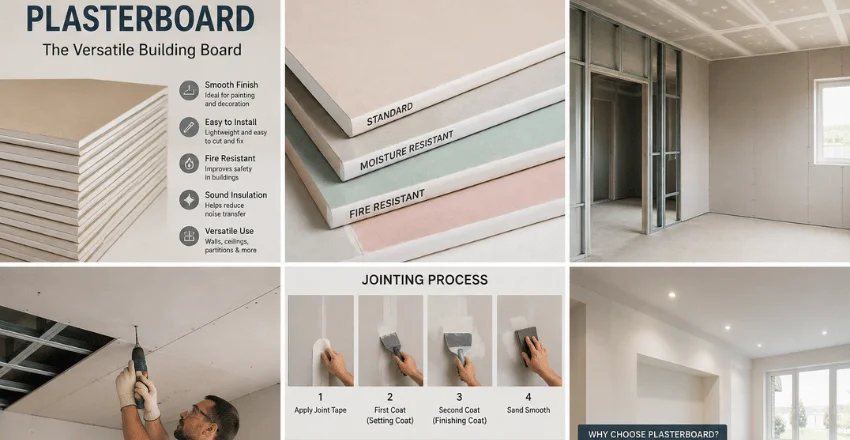
Plasterboard is a gypsum-core building board faced with paper or another liner. It is used mainly for internal walls, partitions, and ceilings. For most UK domestic work, 12.5mm is the standard choice. Use moisture-resistant, fire-rated, acoustic, or thermal boards when the room or building system requires additional performance.
Choosing the right board matters because different rooms place different demands on walls and ceilings. A standard bedroom may need only a basic lining, while a bathroom, garage, or shared wall may require specialist performance. If you’re planning a broader renovation, Thinkvista’s Home Improvement section offers more ideas for enhancing domestic spaces.
Plasterboard at a Glance: The Main Choices for UK Homes
| What you need | Suitable board type | Common thickness | Typical use |
|---|---|---|---|
| General internal lining | Standard gypsum board | 12.5mm | Bedrooms, halls, living spaces |
| Better moisture resistance | Moisture-resistant board | 12.5mm | Kitchens, bathrooms, utility areas |
| Fire performance | Fire-resistant board | 12.5mm or as specified by the system | Garages, protected routes, specified partitions |
| Better sound control | Acoustic board | 12.5mm or 15mm | Bedrooms, home offices, separating walls |
| Added insulation | Thermal laminate board | Product-dependent | Cold walls and refurbishment projects |
| Vapour control | Foil-backed or vapour-control board | Product-dependent | Locations where the design requires vapour control |
| Specialist performance | Impact-resistant, flexible, or combined board | Product-dependent | High-traffic areas or unusual designs |
Specialist boards should be chosen according to their declared performance and the complete wall or ceiling specification. A board’s color alone does not prove that an assembly meets a required fire, acoustic, or moisture standard. Manufacturers offer products designed to meet these individual or combined requirements.
What This Building Board Is and Why It Is So Common
Gypsum board consists mainly of a gypsum core held between facing materials. In the UK, you may also hear it called drywall, wallboard, or gypsum board. It is widely used for partitions, wall linings, and ceilings because it creates a flat surface without the need for traditional lath-and-plaster construction.
Modern products do more than provide a surface for paint. Manufacturers produce boards for sound reduction, moisture control, thermal performance, impact resistance, and fire-protection systems. This makes the material useful in both straightforward decorating projects and performance-led renovations.
Seven Main Board Types and Where Each Fits
1. Standard gypsum board. This is the everyday choice for dry internal spaces. A 12.5mm sheet is commonly used for walls and can also be installed on ceilings where the supporting system is suitable.
2. Moisture-resistant board. This type is intended for locations exposed to higher humidity. British Gypsum’s current 12.5mm moisture-resistant product is classified as Type H1 under BS EN 520 and can provide a base for tiling in wet-use areas.
Moisture resistance should not be confused with complete waterproofing. British Gypsum advises considering a proprietary tanking system before tiling to provide additional protection. Areas exposed to heavier or more direct water contact may also require a dedicated tile-backer product.
3. Fire-resistant board. Specialist fire-resistant products are designed for use in fire-protection systems. British Gypsum, for example, supplies a 12.5mm Type F board for specified partitions, wall linings, and ceilings. Fire performance depends on the complete tested construction, not on a single sheet in isolation.
That distinction matters because England’s Approved Document B sets out building-regulation guidance for fire safety, which is subject to current standards and amendments. Check the specified system rather than assuming that a thicker or colored sheet provides a particular period of fire resistance.
4. Acoustic board. Higher-density products can help reduce sound transmission when installed as part of a suitable partition or lining system. They can be useful around bedrooms, home offices, and separating walls.
5. Thermal laminate board. These products combine a lining board with insulation. They can be useful when improving the thermal performance of an internal wall without installing separate layers.
6. Vapor-control board. Some products include a backing layer that reduces water-vapour movement through the building element. Their suitability depends on the wall or ceiling design, so follow the specified build-up rather than adding one automatically.
7. Specialist and combined boards. Options are available for impact resistance, curved work, sound control, moisture resistance, and combined performance. Choose according to the specific demands of the room or project.
Choosing the Right Thickness and Sheet Size
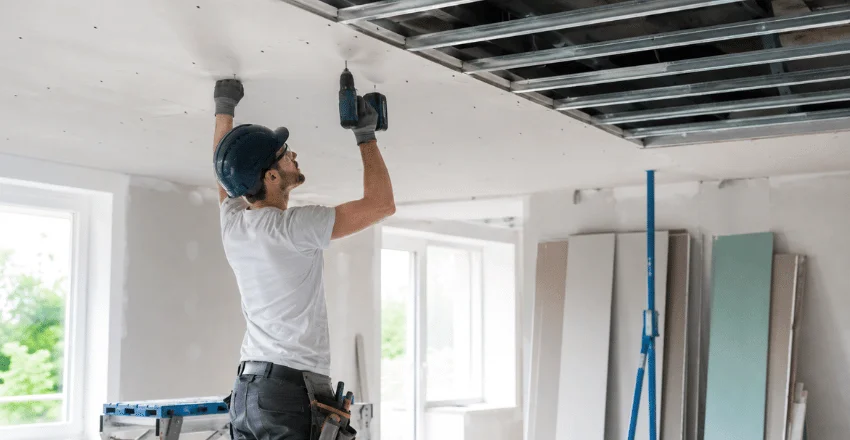
For typical UK interior walls, 12.5mm is the usual starting point. B&Q also notes that 9.5mm sheets are lighter and are sometimes used on ceilings, while 15mm products can provide additional strength or specialist properties.
Don’t choose thickness based on room type alone. Stud or joist spacing, the number of layers, the fixing pattern, and the required acoustic or fire performance can all affect the specification. Check the board manufacturer’s system details before buying materials for performance-critical work.
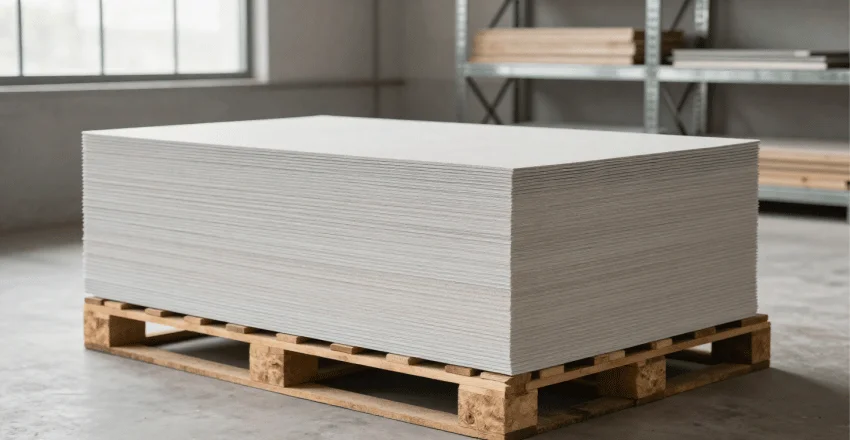
Large sheets reduce the number of joints, but they are harder to maneuver in tight spaces. Smaller boards may be more practical in lofts, stairways, or occupied homes where access is limited.
A Room-by-Room Decision Guide
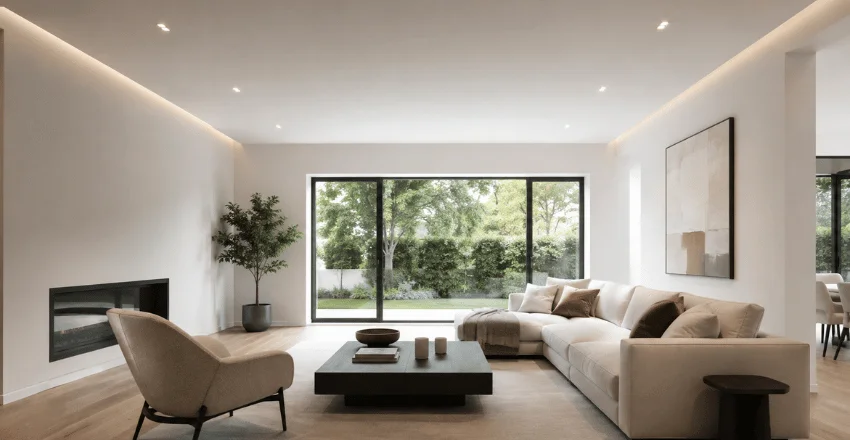
A simple way to choose is to start with the room’s main requirement rather than the sheet’s color.
| Room or location | Start by considering | Why |
| Living room | Standard board | Suitable for normal, dry internal conditions |
| Bedroom | Standard or acoustic board | Sound control may improve privacy |
| Bathroom | Moisture-resistant board or wet-area system | Humidity and splashing require more protection |
| Kitchen | Moisture-resistant board where needed | Steam and moisture can affect finishes |
| Home office | Acoustic board | Useful where speech or household noise matters |
| Garage or protected partition | Specified fire-protection system | Fire performance may be a regulatory requirement |
| Cold external-facing wall | Thermal laminate system | Can add insulation where the design permits |
When you’re renovating a compact kitchen, wall and ceiling choices should also work with the cabinetry, lighting, and storage. Thinkvista’s small-kitchen design ideas explore those later planning decisions.
For bedrooms, think about the finished layout before closing the wall. Heavy headboards, shelving, and furniture may affect where you want studs or other suitable supports. Thinkvista’s guide to choosing a statement bed is useful when planning the finished room.
Square Edge or Tapered Edge?
Both edge types can work, but your planned finish should guide the choice. Siniat’s standard 12.5mm board is available with square or tapered edges and can be finished using tape-and-joint methods or skimming.
Tapered edges create space around adjoining sheets for tape and jointing compound, helping to create a flatter finished joint. Square-edge sheets can also be jointed, but they are often associated with full-skim finishes or applications where joint treatment is specified.
Do You Need to Skim the Boards?
Not always. A correctly installed lining can either receive a thin plaster skim or be finished using an appropriate jointing system before decoration. The chosen board, edge profile, and manufacturer’s finishing instructions should determine the method.
Once the walls are finished, furniture scale and placement become the next considerations. Thinkvista’s guide to using statement furniture without overwhelming a room can help connect the building work with the final interior design.
Common Mistakes to Avoid
- Choosing a product by its face color instead of checking its classification and data sheet.
- Assuming that a thicker standard sheet automatically creates a compliant fire-rated wall.
- Treating moisture resistance as a substitute for the required wet-area protection.
- Buying sheets before checking framing centers, the number of layers, and fixing requirements.
- Ignoring the edge profile until the finishing stage.
- Forgetting to plan suitable support for heavy wall-mounted furniture or fittings.
- Mixing products from different systems without checking whether the required performance is still supported.
Choosing the board by performance, not color
Before ordering, write down five things: the room, the level of moisture exposure, the required fire or acoustic performance, the supporting frame, and the intended finish. Then match those requirements to a documented wall or ceiling system.
For a simple dry room, standard 12.5mm gypsum board will often be the starting point. For bathrooms, separating walls, garages, or noise-sensitive spaces, choose the specialist specification first. This approach reduces wasted materials and helps ensure that the finished room delivers the performance you need.
Frequently Asked Questions
For many domestic walls and ceilings, 12.5mm is the standard starting point. A 9.5mm board may suit some lighter ceiling applications, while 15mm and other specialist products can form part of higher-performance systems. Always match the thickness to the framing and the manufacturer’s specification.
Yes, but choose a product designed for the expected moisture conditions. Moisture-resistant gypsum boards can be used in many domestic bathroom applications. Areas with greater or more direct water exposure may require tanking or a dedicated wet-area tile-backer system.
In everyday UK building terminology, the terms overlap. Siniat lists gypsum board, drywall, wallboard, and wall panels as alternative names for the same general family of building boards.
No. Some products can be skimmed, while suitable boards can also be tape-and-jointed. Follow the finishing instructions for the exact product and edge type.
It can help reduce sound transmission, but overall performance depends on the complete construction. Studs, insulation, board layers, joints, and perimeter sealing all affect the finished wall. Manufacturers test acoustic products as part of complete systems.