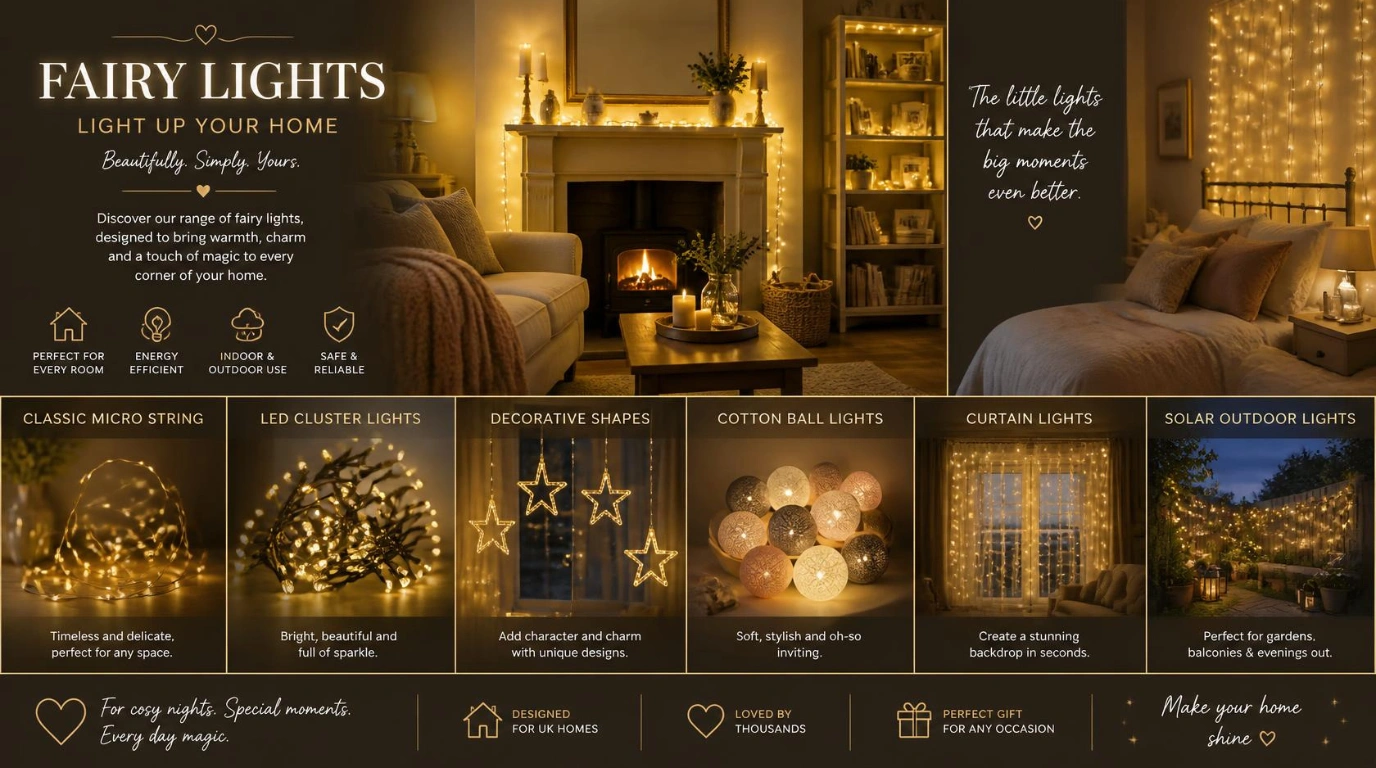
The right fairy lights can make a bedroom feel cozier, soften a living room, or give a garden a useful evening atmosphere. The difficult part is choosing a set that suits the location, power supply, and amount of light you need.
Quick answer: For indoor decorating, LED battery-powered or low-voltage plug-in strings offer the most flexibility. Outdoors, choose products specifically rated for exterior use. Solar sets suit places without sockets, while mains-powered strings provide more consistent light. Check cable length, controls, and safety information before you buy.
| What to check | Practical choice | Why it matters |
| Location | Indoor- or outdoor-rated | Exterior products need protection suited to weather exposure. |
| Power | Battery, solar, or mains | Determines placement, brightness, and maintenance |
| Light color | Warm white, white, or colored | Changes the mood of the space |
| Length | Measure the full route first. | Prevents a strand from ending short of the intended position |
| Controls | Timer, remote, or simple switch | Makes daily use easier |
| Cable color | Clear, green, silver, or dark | Helps the wire blend into its surroundings |
Key Takeaways
- Choose the location before choosing the design.
- Measure both the illuminated section and the distance to a power source.
- Battery sets work well where cables would be awkward.
- Solar lighting is convenient outside but depends on available daylight.
- Use products intended for outdoor use wherever moisture may reach them.
- Timers are useful for both convenience and avoiding unnecessary overnight use.
- Buy electrical products from a reputable retailer and inspect cables before installation.
How to Choose Fairy Lights for Your Space
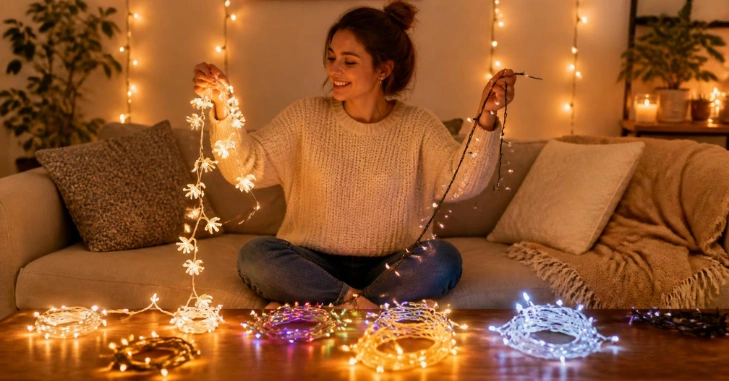
Fairy Lights starts with where the lights will go, rather than choosing a shape or color first. A short strand around a mirror has different requirements from a canopy across a patio.
The power source is the next decision. Current UK retailers stock battery-operated, solar, low-voltage, and mains-powered designs, alongside curtain and connectable systems.
| Type | Advantages | Trade-offs | Works well for |
| Battery-powered strings | No socket needed; easy to move | Batteries need replacing or recharging. | Shelves, mirrors, bedrooms, and table displays |
| Plug-in LED strings | Consistent output; useful for longer runs | Needs a suitable nearby socket | Living rooms and permanent indoor displays |
| Solar strings | No mains cable across the garden | Performance varies with available daylight. | Fences, balconies, shrubs, and casual garden lighting |
| Connectable strings | Can cover larger areas | Requires more planning and compatible components | Pergolas, events, and long exterior runs |
| Curtain lights | Covers a wide vertical area quickly | Less flexible for small features | Windows, blank walls, and event backdrops |
Verdict: For a rented bedroom or small decorative feature, battery or low-voltage options are usually the simplest. Choose mains power for a longer, regularly used installation. In gardens without convenient power, solar strings offer the easiest starting point.
Choose the Power Source Before the Design
Battery-operated products solve a common decorating problem: there may be no socket where you want the light. They can work well on shelving, inside display jars, or around furniture. For a permanent arrangement, a plug-in LED set reduces the need to change batteries. Check where the plug, transformer, and lead cable will sit before fixing anything to a wall.
Solar products remove the need for an outdoor extension cable. IKEA’s current UK outdoor range, for example, includes both solar and battery-operated designs. Don’t choose solar solely because it has no direct electricity cost. The panel still needs a suitable position with enough daylight to recharge the battery.
Indoor and Outdoor Lighting Are Not Interchangeable
A strand designed for a dry bedroom shouldn’t automatically be moved onto a fence or pergola. Rain, condensation, and damp conditions create different requirements. Check the manufacturer’s stated location and weather rating before installation. Some current garden products are sold with weather-resistant ratings, while others are intended only for indoor use.
Pay attention to the transformer and plug, as well as the illuminated cable. A light string may be suitable for outdoor use, while some of its power equipment still needs to be kept in a protected area.
For garden planning beyond lighting, Thinkvista’s home improvement section brings together its current home and outdoor guides.
What Do Decorative String Lights Cost in the UK?
Prices vary widely because a small novelty strand and a smart outdoor system serve different purposes. As a 3 September 2026 UK price snapshot, Dunelm listed several small decorative LED strings at about £4 to £15. IKEA listed outdoor lighting chains from about £9, with longer or adjustable-color options reaching £40.
John Lewis showed standard LED strings at roughly £12.99 to £47.99, while premium Philips Hue outdoor systems were priced above £199.
That makes the buying decision easier to frame:
- Under £15: small decorative or basic battery and solar options.
- Around £15 to £50: longer strings, outdoor products, and more substantial decorative designs.
- £100 and above: specialist smart systems and premium connected lighting.
Prices and stock change, so treat these figures as a point of comparison rather than a fixed price list.
Pick a Light Color That Fits the Room
Warm white creates a softer appearance and tends to work well in bedrooms, with timber furniture, and in living areas. Brighter white gives a cleaner, sharper effect. Colored strings can suit parties, children’s spaces, or seasonal decorating. If the room already contains bold furniture, a simple warm-white strand may prevent the lighting from competing with everything else.
That same principle applies to furniture. Thinkvista’s guide to using statement furniture without overwhelming a room explains how a single visual focal point can be more effective than several competing features.
In the main bedroom, lighting can also frame the bed rather than dominate it. See the site’s advice on choosing a statement bed for a main bedroom when planning the room as a whole.
How Much Length Do You Need?
Use a tape measure before ordering. Follow the exact path the cable will take rather than measuring the wall from one end to the other.
Remember to account for:
- dips or drapes between fixing points;
- corners and furniture edges;
- the distance from the illuminated section to the socket;
- Extra cable needed to reach a solar panel or protected transformer.
For a loose canopy, you will need more length than the straight-line distance across the space. A tightly wrapped tree trunk or banister also uses cable quickly.
Check the product description carefully. The total cable length and the illuminated length may differ.
How to Hang Decorative Lights Without Damaging Walls
Adhesive hooks and removable decorating clips can work well for lightweight indoor strings. Use products that suit the wall finish and follow their weight limits. Renters should be cautious with tape, nails, and fixings that can damage paint or plaster. Test removable adhesive products in an inconspicuous area where practical.
If you’re fixing decorations to a plasterboard wall, the wall construction affects which fixings are suitable. Thinkvista’s guide to plasterboard types and uses provides useful background before mounting heavier items.
Avoid pinching or piercing electrical cables with staples, nails, or sharp fixings. Keep the cable relaxed rather than pulling it tightly around corners.
Use Decorative Lighting as Part of a Layered Scheme
Small LED strings are primarily used as accent lighting. They shouldn’t replace the main task lighting needed for cooking, reading, or working. In a small kitchen, for example, general lighting and under-cabinet task lighting are more useful for food preparation. Decorative strands can then provide a softer secondary layer away from work areas. Thinkvista’s small kitchen design ideas cover layered lighting in compact spaces.
In a bedroom, try placing a strand around a mirror, headboard, or shelf instead of covering every wall. One defined area usually looks calmer. Outside, strings can outline a pergola, a fence, or a seating zone. The RHS advises using warm tones and directing outdoor light carefully, particularly where wildlife is active at night.
Safety Checks Before You Switch Them On
Electrical Safety First advises checking decorative lighting for damaged cables and broken components before use. Mains-powered lighting should use the correct UK plug and fuse. The organization also recommends switching lights off when nobody is in the room.
UK government fire-safety guidance also advises unplugging decorative lighting when leaving home or going to bed. It warns against overloaded sockets and contact between bulbs and materials that can burn easily.
LED products are a sensible choice where available. The London Fire Brigade notes that LEDs use less energy and stay cooler than older incandescent bulbs. It also advises buying from reputable sellers and checking appropriate safety markings.
A timer can make the routine easier. It prevents a display from remaining on long after you have stopped using the room or garden.
Before You Buy: A 60-Second Checklist
Before you shop, measure the route and identify the nearest safe power source. Then check whether the product is intended for your location.
Confirm these seven points:
- Indoor or outdoor use.
- Illuminated length and lead-cable length.
- Battery, solar, or mains power.
- Light color and bulb style.
- Timer or remote controls.
- Suitable mounting method.
- Clear safety information from a reputable seller.
For most homes, the right choice isn’t the strand with the highest bulb count. It is the one that fits the space, reaches its power source safely, and gives you the amount of light you intended.
Conclusion
Choosing the right fairy lights is about more than finding a design that looks attractive in a product photograph. The best option should suit the location, provide the right level of illumination, use a practical power source, and be safe for the environment where you plan to install it.
For bedrooms, living rooms, shelves, mirrors, and other indoor spaces, battery-powered or low-voltage LED designs can offer plenty of flexibility. Mains-powered strings are useful for longer or more permanent displays, while solar lights can be convenient for gardens, balconies, fences, and other outdoor areas where access to a socket is difficult.
Frequently Asked Questions
UK fire-safety guidance recommends switching off or unplugging decorative lighting when you go to bed. Check the cable, plug, and bulbs regularly, and replace any damaged items rather than continuing to use them.
LED decorative lighting generally uses less electricity than older incandescent lighting. The exact consumption depends on the product’s wattage, so check the label or specifications rather than estimating based on the number of bulbs.
Only use a product outside if the manufacturer states that it is suitable for that location. Indoor-only equipment isn’t designed for rain or damp exterior conditions.
Choose solar for an outdoor location that receives sufficient daylight and lacks a convenient socket. Battery power is more predictable for small indoor displays and shaded areas. Your intended position should decide between them.
Warm white is a common choice for a softer evening atmosphere. Colored or shaped bulbs can become a stronger decorative feature, while plain micro LEDs suit a simpler room.