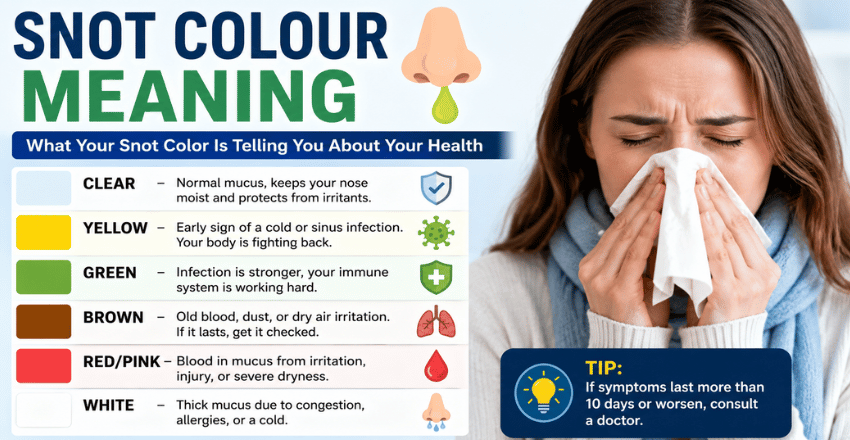
Most people rarely pay attention to mucus until they experience a cold, allergies, or sinus congestion, but Snot Color Meaning can actually reveal surprising insights about their health. Your body naturally produces mucus every day to protect the nasal passages, trap dust, germs, and allergens, and keep the airways moist and healthy.
When the color or texture of mucus changes, it may indicate infections, allergies, irritation, or other underlying health issues. Understanding snot color meaning helps you identify whether your symptoms are mild and temporary or a sign that medical attention may be needed.
While mucus’s color alone cannot diagnose any disease, it often provides useful clues about what is happening inside your body. This complete guide will explain what clear, white, yellow, green, brown, red, and black mucus may mean, along with their common causes, symptoms, and possible treatments.
| Snot Color Meaning | What It May Mean | Common Causes | When to Worry |
| Clear | Normal healthy mucus or mild irritation | Allergies, early cold, cold weather, crying | Usually harmless unless excessive or long-lasting |
| White | Nasal congestion or swelling | Common cold, sinus infection, dehydration, dry air | If accompanied by severe congestion or pain |
| Yellow | The immune system is fighting infection. | Viral infection, flu, sinus infection | If symptoms persist or worsen |
| Green | Strong infection or advanced immune response | Sinus infection, prolonged cold, viral/bacterial infection | It lasts 10–14 days or, with severe symptoms, |
| Brown | Old blood, dirt, and smoke exposure | Smoking, pollution, dry air, dust | If with breathing issues or chronic symptoms |
| Red/Pink | Blood in mucus | Dry nose, nose blowing, allergies, injury | If frequent bleeding or heavy blood |
| Black | Smoke or serious infection (rare) | Smoking, pollution, fungal infection | If with pain, fever, or swelling |
What is Snot Color Meaning?

“Snot color meaning” refers to the interpretation of different mucus colors produced by the body and what they may indicate about your health. Mucus, commonly known as snot, is naturally produced by the nose and sinuses to trap dust, germs, and allergens while keeping the airways moist and protected.
The color of mucus can change depending on factors such as infections, allergies, dehydration, or exposure to irritants. For example, clear mucus is usually normal, while yellow or green mucus may suggest that the immune system is fighting an infection. In some cases, brown, red, or black mucus can indicate irritation, old blood, smoking, or environmental exposure.
What Is Mucus and Why Does Your Body Produce It?
- Mucus is a slippery substance naturally produced by the lining of the
- Nose
- Throat
- Sinuses
- It plays an important role in keeping the respiratory system healthy.
Main Functions of Mucus
Your body uses mucus to
- Trap dust, bacteria, viruses, and allergens
- Keep nasal tissues moist
- Prevent dryness and irritation
- Protect the lungs and airways
- Remove harmful particles from the body
Healthy Mucus Appearance
- Healthy mucus is usually
- Clear
- Thin
- Changes in mucus color, thickness, or amount may occur when:
- The immune system responds to infections
- Allergies develop
- Nasal irritation occurs
- Sinus problems are present.
Clear Snot Meaning
Clear mucus is generally considered normal and healthy because your body naturally produces it to clean, lubricate, and protect the nasal passages. Clear snot can occur due to normal body function, seasonal allergies, crying, cold weather, spicy foods, the early stages of a cold, or mild viral infections. People with clear mucus may also experience symptoms such as sneezing, watery eyes, mild nasal congestion, a runny nose, and an itchy throat.
Although clear mucus is usually harmless, excessive watery drainage can sometimes be linked to allergic rhinitis, viral infections, sinus irritation, or, in rare cases, cerebrospinal fluid leakage after a head injury.
White Snot Meaning

- White mucus often appears when the nasal tissues become swollen and inflamed.
- Reduced airflow through the nose can make mucus thicker and cloudier.
Common Causes of White Mucus
- Nasal congestion
- Common cold
- Sinus infection
- Dehydration
- Dry indoor air
Signs Often Seen with White Snot
Symptoms may include:
- Stuffy nose
- Facial pressure
- Mild headache
- Reduced sense of smell
Yellow Snot Meaning

Yellow mucus usually indicates that your immune system is actively fighting an infection. White blood cells move to the infected area, and as they break down, they can give the mucus a yellowish color.
Common Causes of Yellow Mucus
Yellow snot is commonly linked to viral infections, the common cold, mild sinus infections, flu, and the body’s natural immune response during illness.
What Happens Inside the Body?
When germs enter your body, immune cells attack and destroy them. After these cells die, they become trapped in the mucus, which is what creates the yellow color.
Symptoms That May Accompany Yellow Mucus
Yellow mucus is often accompanied by fatigue, fever, nasal congestion, cough, mild sinus pressure, and a sore throat.
Green Snot

- Green mucus often suggests a stronger immune response or a more advanced infection.
- The green color usually comes from enzymes released by white blood cells.
Common Causes of Green Mucus
- Green snot may be associated with
- Viral infections
- Sinus infections
- Bacterial infections
- Prolonged colds
- Respiratory illnesses
Does Green Mucus Always Mean Bacterial Infection?
- One common misconception is that green mucus always means a bacterial infection.
- In reality, viral infections can also produce green mucus.
- However, if green mucus lasts more than 10–14 days or is accompanied by severe symptoms, a bacterial infection becomes more likely.
Symptoms Commonly Linked to Green Mucus
- Thick nasal discharge
- Facial pain
- Pressure around the eyes
- Fever
- Bad breath
- Persistent congestion
Brown Snot
Brown mucus can look alarming, but it is often caused by old blood, dirt, smoke, or environmental debris entering the nasal passages. This condition is commonly explained by snot color, meaning brown, which helps identify how external factors and minor nasal irritation can change mucus appearance.
Red or Pink Snot Meaning
Red or pink mucus usually indicates the presence of blood. This happens because the small blood vessels inside the nose are very delicate and can break easily.
Common Causes of Bloody Mucus
Red or pink mucus may result from the following:
- Dry nasal passages
- Frequent nose blowing
- Nose picking
- Sinus infections
- Nasal injuries
- Allergies
Minor Bleeding Is Often Harmless
- Small streaks of blood in mucus are usually not serious.
- This is especially common during cold weather or illness.
- Dry air and irritation can cause tiny blood vessels in the nose to rupture.
Warning Signs That Require Medical Care
You should consult a healthcare professional if you experience:
- Heavy bleeding
- Frequent nosebleeds
- Blood mixed with thick mucus
- Dizziness
- Shortness of breath
Black Snot Meaning

Black mucus is less common and may indicate exposure to smoke, pollution, or, in rare cases, fungal infections. It can be caused by smoking, air pollution, coal or dust exposure, fire damage exposure, or chronic fungal sinus infections. Smokers often notice darker mucus because cigarette smoke contains chemicals and particles that can stain mucus over time, turning it dark brown or black.
However, black mucus may become a serious concern if it is accompanied by severe sinus pain, fever, or facial swelling, as this could indicate a fungal infection that requires prompt medical attention. This condition is often highlighted in snot color, meaning black, which explains when dark mucus may be linked to serious infections or environmental exposure and when medical advice should be sought.
Thick vs Thin Mucus: What Texture Means
Mucus Texture
Mucus texture can provide important clues about your respiratory health, hydration level, and how your immune system is responding to infections or irritants. Changes in thickness often happen when your body is fighting illness or reacting to environmental factors.
Thin and Watery Mucus
Thin or watery mucus is usually a sign of mild irritation or an early response from the body. It is commonly associated with allergies, early viral infections, cold weather exposure, spicy foods, or irritants like dust and smoke.
Thick and Sticky Mucus
Thick or sticky mucus often develops when your body is more dehydrated or actively fighting an infection. Itmay indicate dehydration, sinus infections, dry indoor air, or more advanced stages of a cold. This type of mucus can make breathing through the nose difficult and may be accompanied by congestion, facial pressure, headache, and reduced sense of smell.
Helpful Tip
Staying well-hydrated is one of the best ways to manage thick mucus, as it helps thin secretions naturally. Drinking warm fluids, using steam inhalation, and maintaining humid indoor air can also improve mucus flow and support easier breathing.
How to Treat Unhealthy Mucus

Helpful Remedies Include
- Drinking plenty of water
- Using saline nasal sprays
- Running a humidifier
- Taking steam inhalation
- Getting enough rest
- Avoiding smoke exposure
Over-the-Counter Treatments
- You may benefit from:
- Decongestant
- Antihistamines
- Nasal sprays
- Pain relievers
Tips to Keep Your Sinuses Healthy
- Staying hydrated
- Washing hands regularly
- Avoiding cigarette smoke
- Managing allergies
- Getting enough sleep
- Eating a balanced diet
Conclusion
Understanding Snot Color Meaning is an important way to gain insight into your respiratory health and recognize how your body responds to infections, allergies, dehydration, and environmental irritants. While clear mucus is usually normal, changes to yellow or green snot often suggest that your immune system is actively fighting a viral or bacterial infection.
In contrast, brown, red, or black mucus may point to irritation, exposure to smoke or pollution, or, in some cases, more serious underlying conditions that may require medical attention. However, it is important to remember that mucus color alone cannot provide a medical diagnosis. Instead, it should be considered alongside other symptoms such as fever, congestion, pain, and duration of illness.
Apart from that, if you want to know more about How Long Does It Take to Walk 10,000 Steps? Complete Beginner-to-Expert Guide Covering Time, Distance, Calories Burned, and Daily Fitness Benefits then visit our Health category.
FAQs
The discharge is initially clear before turning hazy. Occasionally, it turns green or yellow for a few days.
No, you don’t always require antibiotics if you have yellow snot.
Meanings of Your Mucus Color: Green Mucus to Clear Snot. There is nothing intrinsically “worse” about any color.