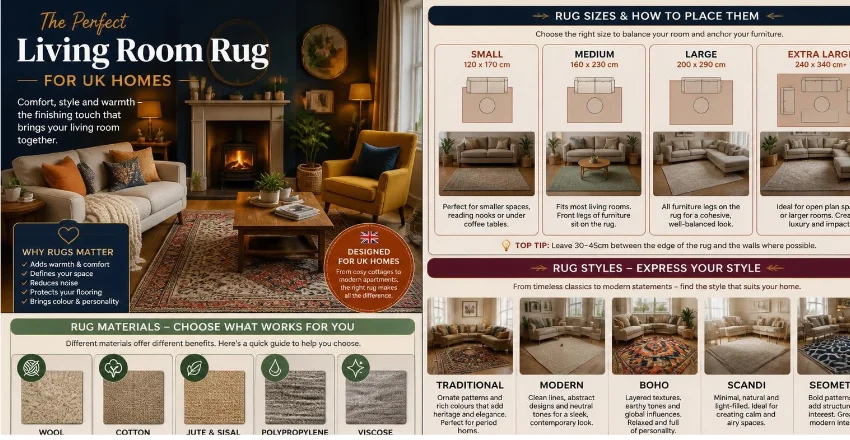
Choosing the right rug can change how your whole living room feels. The right size connects furniture and adds warmth without making the floor look crowded. This guide explains how to choose living room rugs for UK homes with confidence.
Quick answer: Choose your rug around the seating area rather than the entire room. Measure your sofa and chairs before shopping. In many UK lounges, the rug should extend beneath the front legs of your furniture. Then choose a material and pile that suit your household, flooring, cleaning routine, and preferred style.
| What to check | Good starting point | Why it matters |
| Rug size | Measure the complete seating area | Prevents the rug looking undersized |
| Placement | Front sofa and chair legs on the rug | Visually connects the furniture |
| Material | Match fibres to traffic and cleaning needs | Affects comfort and maintenance |
| Pile | Low pile for practicality; deeper pile for softness | Changes feel and cleaning effort |
| Colour | Coordinate with major furniture | Creates a balanced scheme |
| Pattern | Consider existing prints and textures | Prevents visual competition |
| Underlay | Check grip and floor compatibility | Helps reduce unwanted movement |
| Care | Check cleaning instructions before buying | Makes long-term upkeep easier |
Key Takeaways
- Measure your seating arrangement before choosing a rug size.
- Avoid choosing a small rug based only on price or available floor space.
- In many average-sized rooms, front furniture legs can sit on the rug.
- Low-pile options are easier to maintain in busy households.
- Wool offers warmth and resilience but usually costs more.
- Synthetic fibres suit homes that need straightforward cleaning.
- Neutral designs are flexible, while patterns can create a focal point.
- Always check the manufacturer’s cleaning and floor-care instructions.
How to Choose Living Room Rugs for UK Homes

Start with your furniture rather than choosing a design from a product photograph. Measure the sofa, armchairs, coffee table, and the complete seating footprint. This approach gives you a useful minimum area for Living room rugs before you compare available sizes.
Next, decide how much furniture should rest on the rug. Larger rooms can accommodate every furniture leg on one generous rug. Smaller spaces often work well with only the front legs resting on it.
Finally, consider how your household uses the room each day. Children, pets, frequent visitors, and food can make easy maintenance more important. A quieter formal lounge may give you greater freedom with delicate textures.
What Size Living Room Rug Should You Choose?
Size strongly affects how a rug looks after installation. An undersized design can leave sofas and chairs appearing disconnected from each other. A larger rug usually creates a clearer visual relationship between the main pieces.
Common UK rug dimensions include approximately 120 × 170cm, 160 × 230cm, and 200 × 290cm. Larger options around 240 × 340cm are also widely available. Exact dimensions vary between manufacturers, so treat these measurements as useful shopping ranges.
| Approximate size | Typical use | Placement idea |
| 120 × 170cm | Compact seating area | Often centred around a coffee table |
| 160 × 230cm | Small to medium lounge | Front sofa legs can rest on the rug |
| 200 × 290cm | Medium or larger lounge | Can anchor several seating pieces |
| 240 × 340cm+ | Large or open-plan room | Can define a complete seating zone |
Current UK sizing guidance recommends measuring the furniture group rather than guessing from room dimensions. IKEA also advises choosing a rug longer than the sofa when framing a seating area. At least part of the sofa can then rest on the rug.
Try the Masking-Tape Test
Use low-tack masking tape to mark your preferred rug dimensions on the floor. Walk around the outline and view it from different parts of the room. This simple test makes scale easier to judge before spending money.
Check how the outline relates to doors, fireplaces, cabinets, and walking routes. Make sure opening doors won’t continually catch a thicker rug edge. Also check whether chairs can move comfortably within the planned area.
If you’re deciding between two sizes, compare both outlines before ordering. The larger option often anchors furniture more convincingly when space permits. Your actual furniture arrangement should make the final decision.
Three Rug Placement Options That Work
The front-legs-on arrangement is flexible for many UK living rooms. The front legs of sofas and armchairs rest on the rug. Rear legs remain on the surrounding floor, connecting the group without requiring an oversized rug.
An all-legs-on arrangement works well in larger rooms and open-plan spaces. Every main seating piece rests completely within the rug’s boundaries. This placement can create a clearly defined conversation area within a bigger space.
A coffee-table-only arrangement uses a smaller rug between the surrounding seats. It can suit tight spaces where larger sizes aren’t practical. Be careful with scale, because an overly small rug may look isolated.
Which Rug Material Is BestNo single
No single material suits every household. Comfort, maintenance, budget, pets, and foot traffic should influence your decision. Check the specific product’s care label because performance can differ between constructions.
Wool is popular for its warmth, texture, and natural resilience. It can suit a comfortable lounge where softness matters. Prices and cleaning requirements vary considerably between individual wool products.
Synthetic fibres can provide practical choices for busy family rooms. Many products are designed for stain resistance and easy maintenance. Always follow the mmanufacturer’sinstructions instead of assuming every synthetic rug is washable.
Cotton can feel lighter and more relaxed than thick wool. Some smaller cotton designs are easier to handle during cleaning. Larger products may still require specialist care, depending on their construction.
Jute and other plant fibres provide noticeable natural texture. They work particularly well with timber, neutral colours, and relaxed interior schemes. Check cleaning requirements carefully because moisture can be unsuitable for some natural-fibre products.
Low Pile or Deep Pile?
Low-pile rugs have shorter fibres and a flatter surface. They are generally easier to vacuum and can suit high-traffic rooms. Their lower profile can also help where door clearance is limited.
Deep-pile rugs feel softer underfoot. They can make a lounge feel warmer and more comfortable during colder months. Longer fibres usually demand more careful cleaning and may trap more debris.
Think about daily use before prioritising softness. A frequently used family lounge may benefit from easier maintenance. A lower-traffic sitting room gives you more freedom to choose a deeper texture.
Choosing Colours and Patterns
Begin with the room’s largest permanent features. Flooring, sofas, curtains, and wall colours create the existing palette your rug must join. You don’t need an exact colour match for the room to feel coordinated.
Neutral rugs can provide a calm foundation beneath stronger furniture. Beige, cream, grey, taupe, and earthy tones can work across many decorating styles. Texture can stop a neutral design from feeling visually flat.
Patterned rugs can become a focal point in simpler rooms. Geometric, traditional, abstract, and botanical designs each create a different mood. Keep surrounding patterns controlled when the rug already carries substantial visual detail.
ThinkVista’s advice on choosing statement furniture without overwhelming a room follows a similar principle. One strong focal feature often works better than several competing pieces. This approach can help you decide whether the sofa or rug should command more attention.
Match the Rug to Your Lighting
Colour can look different as natural and artificial light change throughout the day. A cream rug beside a window may appear brighter than the same colour in a shaded room. Dark colours can also feel heavier when the room receives limited daylight.
Check product samples at different times, whenever possible. Look at them beside your flooring and sofa rather than viewing them separately. This gives you a more realistic impression of the complete scheme.
Lighting choices can also change how texture appears after dark.ThinkVista’s rechargeable lamp buying guide explains how portable lighting can work across different UK rooms. Its fairy lights guide also covers softer decorative lighting for living spaces.
Living Room Rugs for Small Spaces
A small room doesn’t automatically require the smallest available rug. Tiny rugs can divide the floor visually and make individual furniture pieces feel separate. Choosing a size that fits the seating footprint usually creates a more connected look.
Keep the main walking routes clear when measuring a compact lounge. Check door movement and the position of storage furniture before ordering. Furniture should look connected without making movement through the room awkward.
Colour can also help control visual weight. Lighter shades often provide a quieter foundation in compact interiors. A subtle pattern can add interest without dominating limited floor space.
Rugs for Open-Plan Living Rooms
A rug can help define a living zone within an open-plan interior. Choose dimensions around the seating group rather than trying to cover the entire open floor. This creates a visible boundary without constructing a physical divider.
Larger arrangements often look best when all main seats sit partly or fully on the rug. Keep the positioning consistent across sofas and chairs. Uneven placement can make a carefully planned furniture group look accidental.
Consider nearby dining furniture before choosing colour or pattern. The living and dining areas don’t need identical textiles. They should still share enough colour or texture to feel connected.
Don’t Forget Underlay and Floor Compatibility
A suitable rug underlay can help reduce movement on smooth flooring. It may also add cushioning and help the rug sit more securely. Choose a product designed for both your rug and the floor beneath it.
Flooring manufacturers may have specific requirements for coverings and underlays. This can matter with timber, luxury vinyl, laminate, or heated floors. Check the relevant product guidance before pairing unfamiliar materials.
Don’t assume every non-slip product works on every floor finish. Materials can react differently to heat, coatings, and prolonged contact. Manufacturer guidance is the safest reference for your specific flooring.
How to Keep a Living Room Rug Looking Good
Regular vacuuming helps remove dust and loose debris before they settle deeper. Adjust the vacuum setting to suit the rug’s pile and manufacturer guidance. Delicate fringes and longer fibres may require a gentler approach.
Clean spills according to the rug’s instructions. Avoid aggressive rubbing because it can spread stains or damage fibres. Test any approved cleaning product in an inconspicuous area first.
Rotate the rug periodically when practical. This helps distribute foot traffic and sunlight exposure more evenly. Move heavy furniture carefully to avoid stretching or damaging the rug.
Common Mistakes to Avoid
The most common mistake is buying before measuring. Product photographs can make dimensions difficult to judge accurately. Measure the actual seating footprint and test the outline on your floor first.
Another mistake is choosing appearance without considering maintenance. A beautiful high-pile rug may frustrate a household dealing with frequent crumbs, muddy paws, or spills. Match the construction to everyday life rather than occasional photographs.
Finally, don’t force several statement elements into one room. A bold sofa, dramatic rug, patterned curtains, and strong wallpaper can compete for attention. Decide which feature should lead and let other pieces support it.
A Simple Buying Checklist
Before ordering, confirm these points:
- Measure the seating area in centimetres.
- Decide which furniture legs will rest on the rug.
- Tape the proposed dimensions onto the floor.
- Check doors, fireplaces, cabinets, and walking routes.
- Choose a material suited to your household.
- Compare low-pile and deeper-pile maintenance needs.
- Check colours against your sofa and flooring.
- Read the cleaning instructions.
- Check whether you need a suitable underlay.
- Review delivery and return conditions before buying.
Choosing the Right Rug for Your Room
Good living room rugs should work with the room rather than merely fill empty floor space. Start with size and placement before considering colour, pattern, or current trends. This order reduces the risk of buying an attractive rug that doesn’t suit your furniture.
For many homes, a practical starting point is placing the front legs of the main seating on the rug. Larger spaces can support an all-legs-on arrangement. Compact rooms need careful measurements rather than automatically choosing a small rug.
Once the scale works, choose the material and appearance around everyday use. Think about cleaning, comfort, children, pets, and existing furniture. A measured decision is more likely to create a comfortable room that feels visually connected.
Frequently Asked Questions About Living Room Rugs
What size rug is best for a living room?
The correct size depends on your seating footprint and furniture arrangement. Many UK retailers sell options around 160 × 230cm and 200 × 290cm. Measure and tape the dimensions onto your floor before choosing.
Should a living room rug go under the sofa?
It doesn’t need to sit completely beneath the sofa. Placing the front sofa legs on the rug often creates a connected furniture arrangement. Large rooms can accommodate the entire sofa and chairs on one rug.
Should a rug be wider than the sofa?
A rug extending beyond the sofa can give the seating arrangement more visual breathing room. IKEA recommends choosing a living-room rug longer than the sofa when framing the seating area. Your room dimensions and nearby furniture should still guide the final width.
What rug material is easiest to maintain?
Maintenance varies by fibre, construction, colour, and manufacturer instructions. Low-pile synthetic options often appeal to households seeking straightforward upkeep. Check the care label before buying, since cleaning methods aren’t universal.
Can you use a large rug in a small living room?
Yes, as long as the dimensions work with doors, walkways, and furniture. A larger rug can connect the seating more effectively than a tiny central rug. Use masking tape to test the dimensions before ordering.
Do you need an underlay beneath a living room rug?
An underlay can improve grip and cushioning on suitable flooring. Choose one approved for the rug and the floor underneath it. Always check flooring guidance, especially with sensitive finishes or underfloor heating.