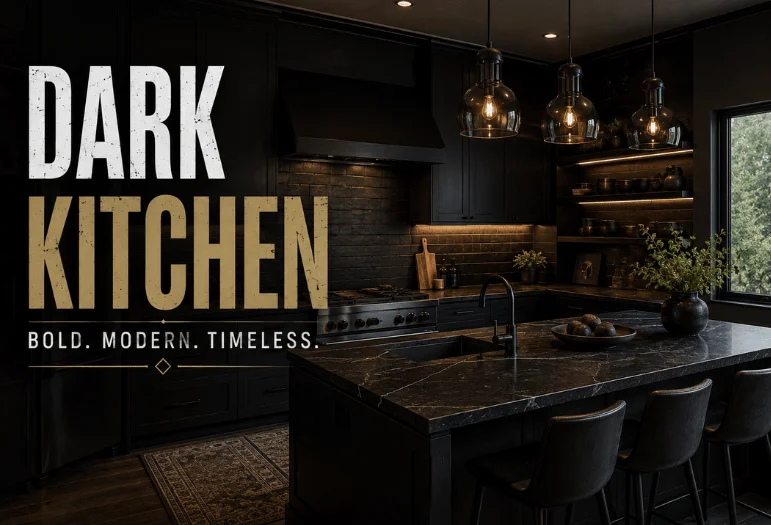
Order a katsu curry at nine on a Tuesday, and it may never have passed a dining room, a waiter or a shopfront. It was cooked in a windowless unit on an industrial estate, handed to a rider, and forgotten within the hour.
That unit is a dark kitchen, and roughly one in seven food outlets on Britain’s biggest delivery apps now works this way. This guide gives the numbers the operator brochures leave out.
Short answer: it is a commercial cooking space built to fill online delivery orders and nothing else. No dining room, no passing trade, no front of house. Orders land through Deliveroo, Just Eat, Uber Eats or your own site. Riders collect them. Rent stays low because the address never has to impress anyone.
The model at a glance
| Item | Where it stands in 2026 |
| What it is | Delivery-only cooking space with no customer seating |
| Also called | Ghost kitchens, cloud kitchens, virtual restaurants |
| Managed unit rent | £1,200 to £1,800 a month outside London, £2,500 to £4,000 inside it |
| Fitting out a raw unit | £30,000 to £50,000 for a small space |
| App commission | Roughly 14% to 35% of order value, with VAT on top |
| Registration | Free, with your local council, 28 days before you trade |
| Planning status | Usually sui generis, so change of use is normally needed |
| Rough break-even | About 20 to 25 orders a day for one regional unit |
Key takeaways
- Cheap rent is the easy saving. Commission is the hard cost, and VAT sits on top of it.
- A managed unit has you cooking in a fortnight. A raw unit costs tens of thousands and takes months.
- You still register with the council, still get inspected, and still carry a hygiene rating.
- Order volume, not menu creativity, decides whether the site survives its first year.
What a dark kitchen actually is
Britain had no agreed definition until recently, which is part of why councils struggled to regulate these sites at all. A research team funded by the National Institute for Health and Care Research settled one in 2025. Their wording: a technology-enabled commercial kitchen operating primarily for delivery, filling remote, on-demand online orders for immediate eating.
The same study found that around 15% of online food outlets in England on Deliveroo, Just Eat and Uber Eats fit that description. Customers mostly have no idea. Under a quarter of the people surveyed had even heard the term.
Three labels get thrown around loosely, so it helps to separate them:
- Ghost kitchens mean the same thing, in mostly American phrasing.
- Cloud kitchens are usually multi-tenant buildings where several brands rent separate units side by side.
- Virtual brands are delivery-only menus run out of premises that already exist, often a pub or restaurant filling quiet hours.
How the money flows
The journey from tap to doorstep is short, and every step takes a slice.
- A customer orders through an app or through your own website.
- The ticket prints in your unit and someone cooks it.
- A rider collects the bag and drops it off, usually within half an hour.
- The platform keeps its commission, and charges VAT on that commission.
- What survives lands in your bank account, normally weekly.
Food and packaging swallow roughly a third of the order value. Commission takes a bigger slice than most new operators expect. Rent and wages come out of whatever is left.
What it costs to open and run one in the UK
Rent and where you put it
A managed unit is the usual way in. You rent fitted space with extraction and cold storage already fitted, plus a waste contract, and you can be cooking within a fortnight of signing.
Rents split sharply by region. Operators quote roughly £1,200 to £1,800 a month for a small regional unit. Manchester and Birmingham sit around £1,200 to £1,500. The London equivalent runs £2,500 to £4,000, and premium London space climbs towards £8,000. Shared commissary memberships start nearer £750.
The same logic that sends people towards the cheapest places to live in the UK applies to your unit. Rent in a northern city can be half the London figure, and a delivery customer never sees your postcode.
Fitting out a raw unit
Take an empty industrial shell instead, and the sums change completely. A small fit-out runs £30,000 to £50,000, and a medium one reaches £100,000. Extraction alone is £5,000 to £20,000, with gas interlock and fire suppression adding £2,000 to £8,000.
You also wait. Landlord consent, planning, contractors and inspections stretch the timeline into months.
The bills nobody quotes you
Waste collection runs £100 to £300 a month. Pest control adds £50 to £150. Public liability cover costs £250 to £800 a year, and commercial energy is charged well above domestic rates. Order management software, packaging and card processing each take their own small bite.
The commission bite
This is the number that decides whether a site works, and it gets quoted misleadingly often. Percentages are charged before VAT, so add a fifth to every headline figure you read.
| Platform | Their riders deliver | You deliver |
| Deliveroo | About 25% to 35% | Lower, negotiated case by case |
| Uber Eats | About 30% | About 13% to 15% |
| Just Eat | About 30% | About 14% to 17% |
Rates are negotiated per site. A single-unit start-up pays near the top of each range, while a chain with volume argues its way down. Add VAT and a 30% headline becomes 36% of the order value, which is a very different business.
Rules you cannot skip
A kitchen no customer ever walks into is still a food business in law. Food Standards Agency guidance is blunt about it. According to the FSA, you must register with your local council at least 28 days before you start trading, and registration is free and cannot be refused. That duty covers distance selling, and it covers firms keeping no food on the premises at all.
Three more obligations follow:
- Hygiene rating. An environmental health officer inspects and scores you, and the delivery apps display that score beside your menu.
- Planning. Councils normally treat delivery-only premises as sui generis, so change of use is usually required. Objections get built on extraction, odour, noise and rider traffic.
- Business rates. In England, a rateable value under £12,000 means no rates at all, tapering away to nothing by £15,000.
Food safety training and a written food safety management plan are not optional either. Skip them and your first inspection goes badly, in public, on an app.
Are dark kitchens profitable? A worked example
Here is a single regional unit at £1,400 a month, taking 25 orders a day at an average basket of £22.
| Line | Monthly |
| Sales, 750 orders at £22 | £16,500 |
| Commission at 30%, plus VAT | £5,940 |
| Food and packaging at 30% | £4,950 |
| Rent | £1,400 |
| Wages, 250 hours | £3,178 |
| Utilities, waste, insurance, software | £700 |
| Left over | £332 |
That is roughly 2% on £16,500 of sales. Push the same site to 40 orders a day and the fixed costs stop eating you alive. Drop to 15, and you are paying for the privilege of working.
Wages move that line more than anything else you control. Two people covering 250 hours a month cost about £3,180 at the April 2026 current National Living Wage rates of £12.71 an hour. Employer National Insurance sits on top of that.
Cash flow is the other quiet killer. Platforms pay weekly, suppliers often want their money sooner, and that gap catches people out in month two. Build a buffer before you open, and know your borrowing options in advance, because several UK payday loan alternatives cost a fraction of high-cost short-term credit.
Who it suits, and who it burns
The model rewards volume and punishes hesitation. It suits an established brand adding delivery capacity, a caterer with idle daytime hours, or a tight menu with strong margins and fast tickets.
It burns anyone who treats cheap rent as the whole argument. Without marketing spend and repeat orders, a shiny unit in an industrial park is simply a quiet one.
Your next step
Get quotes from two managed operators in your city, and ask what commission they think your menu would attract. Then rerun the table above using your own prices and your own rent. If the bottom line still works at 20 orders a day, you have something. If it only works at 50, keep looking.
Frequently asked questions
Yes. It needs council registration, a hygiene inspection and, in most cases, the correct planning use for the building.
Roughly £3,000 to £6,000 covers a deposit, first month and basic stock in a fitted unit. Fitting out a raw space starts nearer £30,000.
Mostly not. Under a quarter of surveyed shoppers had heard the term, and about 9% knew they had ordered from one.
You can register a home kitchen with your council, but platforms and volume both push you towards commercial premises fairly quickly.
Just Eat’s order-only rate is cheapest if you can deliver yourself. If you cannot, run two apps for a month and compare real order volume before committing to either.