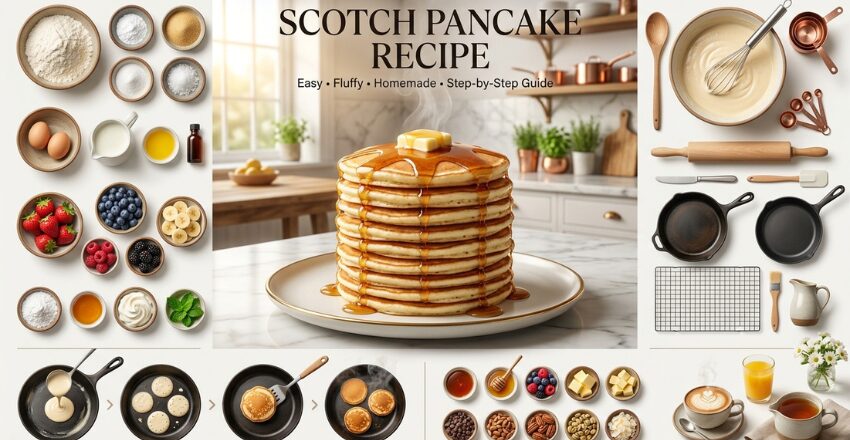
This Scotch Pancake Recipe makes small, soft pancakes with golden edges and a light, fluffy centre. Mix a thick batter, rest it briefly, then cook spoonfuls in a lightly greased frying pan. The whole batch takes about 20 minutes and works well for breakfast, afternoon tea, or a quick family snack.
| What are Scotch pancakes? | Information |
| Preparation time | 5–10 minutes |
| Cooking time | 10–15 minutes |
| Makes | About 12 small pancakes |
| Difficulty | Easy |
| Best served | Warm |
| Suitable for freezing | Yes |
| Main equipment | Mixing bowl, whisk and frying pan |
What You’ll Need
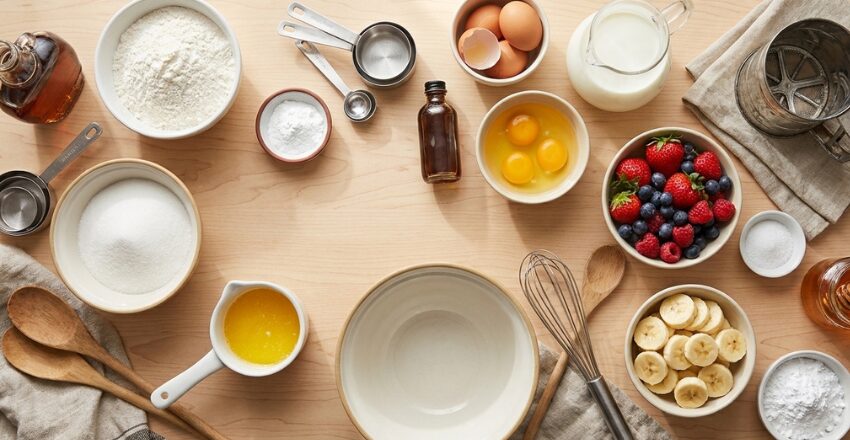
Use ordinary supermarket ingredients for this recipe:
- 200g self-raising flour
- 25g caster sugar
- A small pinch of salt
- 1 large egg
- 250ml milk
- 25g melted butter
- 1 teaspoon vanilla extract, optional
- A little vegetable oil or butter for the pan
Self-raising flour gives the pancakes their lift without requiring several raising agents. When using plain flour, add two teaspoons of baking powder for every 200g of flour.
The batter should be thicker than crêpe batter but loose enough to fall from a spoon. Different flours absorb slightly different amounts of liquid, so keep one or two tablespoons of extra milk nearby.
Scotch Pancake Recipe: Step-by-Step Method
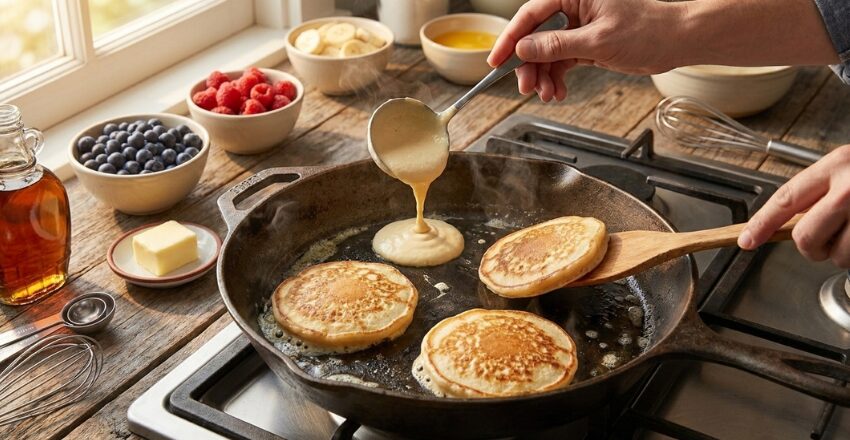
Recipes from Tesco and Easy Peasy Foodie also use a short preparation time, a thick batter, and a quick pan-cooking method. Flipping after bubbles appear is a common signal that the first side has set. Should the Batter Be?
Correct consistency matters more than perfect measuring. Lift the whisk or spoon above the bowl. The mixture should fall in a thick ribbon and settle back into the bowl within a few seconds. It shouldn’t run like milk, but it shouldn’t remain in a stiff lump either.
Use this quick guide:
| Batter problem | Likely cause | Simple fix |
| Spreads across the pan | Too much milk | Mix in one tablespoon of flour |
| Stays in a tall mound | Too little milk | Add one tablespoon of milk |
| Pancakes feel tough | Batter was overmixed | Stir less and stop once combined |
| Centres remain wet | Pan is too hot | Lower the heat and cook more slowly |
| Little or no rise | Weak raising agent | Use fresh self-raising flour or baking powder |
Overmixing can develop more gluten and produce a firmer texture. Baking professionals also recommend gentle mixing, a short rest for the batter, and steady pan heat for fluffier results. Soft, Evenly Cooked Pancakes
Start with a test pancake
Cook one pancake before filling the pan. It lets you check the heat and batter thickness without risking the entire batch. A pale first pancake means the pan needs more time. A dark outside with a wet centre means the temperature is too high.
Use medium-low heat
High heat colours the surface before the centre can cook. Medium-low heat gives the batter time to rise and set. Adjust the temperature between batches, as an empty pan can heat up while you portion the next spoonfuls.
Don’t press them with the spatula
Pressing releases steam and compresses the soft interior. Turn each pancake once, then let the pan do the work.
Grease the pan lightly
Too much butter can burn, creating patchy brown surfaces. Rub a small amount over the pan with folded kitchen paper.
Keep each portion similar
Use the same spoon for every pancake. Equal portions cook at the same rate and make a neater stack.
What Is the Difference Between Scotch and American Pancakes?
Both styles are thicker than British crêpes, but there are a few practical differences.
| Feature | Scotch pancakes | American pancakes |
| Typical size | Small, often palm-sized | Usually wider |
| Common UK name | Drop scones | American-style pancakes |
| Serving style | Butter, jam or honey | Often syrup, fruit or bacon |
| Texture | Soft and lightly springy | Often taller and more cake-like |
| Traditional cooking surface | Griddle or girdle | Griddle or frying pan |
The names are sometimes used interchangeably because recipes vary. The defining features of the Scottish version are its small size, thick batter and drop-scone cooking method. ur Variations
Once you’re comfortable with the basic method, try one of these additions:
- Lemon: Add the finely grated zest of one lemon.
- Cinnamon: Mix half a teaspoon into the flour.
- Blueberry: Place a few berries on each pancake after spooning it into the pan.
- Chocolate chip: Sprinkle a small amount over the uncooked surface.
- Banana: Replace about 50ml of milk with half a well-mashed banana.
- Savoury: Remove the sugar and add grated cheese with chopped chives.
Avoid adding too much fruit or chocolate to the bowl. Heavy additions can make the batter difficult to portion and may cause the centres to cook unevenly.
For more cooking inspiration, browse the ThinkVista Food section. features a lighter Dauphinoise potato recipe without cream for readers planning a wider family menu. eas
Serve the pancakes as soon as possible for the softest texture.
Classic toppings include:
- Salted butter and strawberry jam
- Honey and sliced banana
- Maple syrup and fresh berries
- Greek yoghurt and fruit compote
- Lemon juice and a little sugar
- Warm cinnamon apples
- Peanut butter and banana
For afternoon tea, let them cool and spread a thin layer of butter and jam over each one. They can also be served beside fruit and yoghurt for a simple breakfast plate.
ThinkVista’s guide to food pairings and serving traditions offers further inspiration for building themed menus and relaxed gatherings.
Allow leftovers to cool before storing them. Place baking paper between layers to stop them sticking together. Keep them in an airtight container in the fridge for up to two days. Reheat them briefly in a dry frying pan, toaster, microwave or low oven.
For longer storage, freeze the cooled pancakes in a single layer. Once firm, transfer them to a freezer bag. Reheat them from frozen in a toaster or warm oven until heated through. Freezing suitability is also noted in established Scotch pancake recipes.
Make Your First Batch
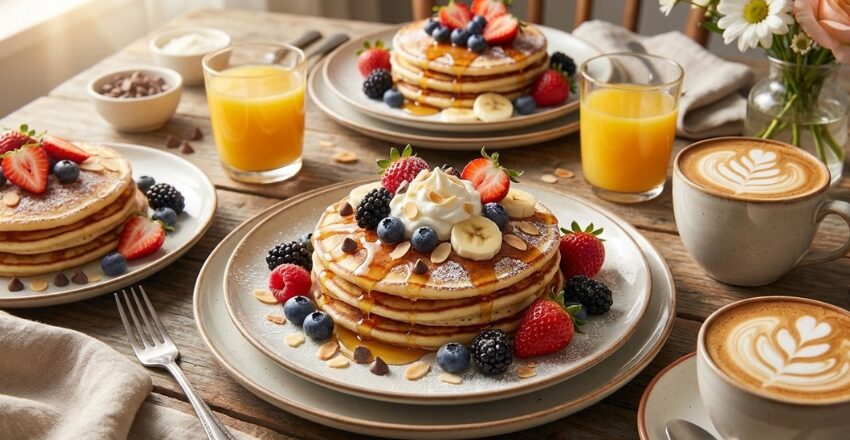
Measure the ingredients, keep the heat moderate, and begin with one test pancake. Once the pan is at the right temperature, the remaining batch should cook quickly and evenly.
Serve them warm with butter and jam, or choose fruit and yoghurt for a lighter plate. Save the method for your next weekend breakfast or afternoon-tea spread.
Frequently Asked Questions
Yes. Replace the self-raising flour with 200g plain flour and add two teaspoons of baking powder. Whisk the raising agent evenly through the flour before adding the liquid.
The batter may be too thin, overmixed, or made with an old raising agent. Add a little flour if it spreads too quickly. Mix gently and check that your flour or baking powder is fresh.
You can mix the dry and wet ingredients separately in advance. Combine them shortly before cooking. A fully mixed batter may lose some lift when stored for many hours.
The pan may not have reached an even temperature, or it may contain too much fat. Treat the first one as a test and adjust the heat before cooking the rest.
Yes. Unsweetened oat or soya milk usually works well. You may need to adjust the amount by one or two tablespoons to achieve the right consistency.
Yes. Double every ingredient, but cook the pancakes in the same small batches. Crowding the pan lowers its temperature and makes turning them harder.