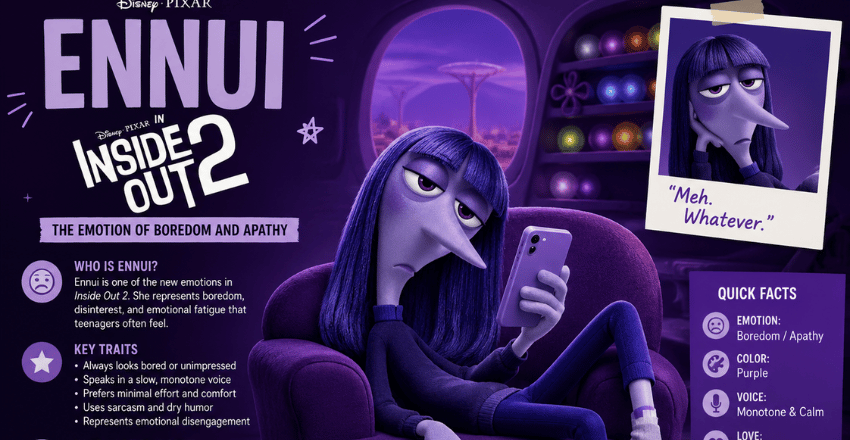
The release of Ennui in Inside Out 2 introduced audiences to a new set of emotions that reflect the challenges and complexities of adolescence. Among these additions, Ennui quickly stood out as one of the most relatable and intriguing characters. Representing boredom, apathy, and emotional disengagement, Ennui captures a feeling that many teenagers and adults experience but rarely discuss in depth.
With her calm demeanor, sarcastic humor, and seemingly effortless indifference, she adds a realistic dimension to Riley’s evolving emotional world. Pixar has long been praised for its ability to transform complex psychological concepts into engaging stories, and Ennui is a perfect example of this talent.
Her character helps viewers understand that emotional growth is not always about excitement, happiness, or dramatic change. Sometimes, it involves moments of uncertainty, boredom, and self-reflection. Through Ennui, Inside Out 2 offers a thoughtful exploration of the emotional experiences.
| Aspect | Details |
| Character Name | Ennui |
| Movie | Inside Out 2 |
| Emotion Represented | Boredom, apathy, emotional disengagement |
| Meaning of Ennui | A feeling of weariness, dissatisfaction, or lack of interest |
| Personality | Calm, detached, sarcastic, and uninterested |
| Key Traits | Monotone voice, relaxed attitude, minimal effort, dry humor |
| Introduced Alongside | Anxiety, Embarrassment, and Envy |
| Role in Riley’s Mind | Represents teenage boredom and emotional fatigue |
| Relationship with Joy | Contrasts optimism with indifference |
| Relationship with Anxiety | Balances worry with emotional detachment. |
| Relationship with Embarrassment | Shows a different response to social pressure |
| Relationship with Envy | Highlights the contrast between desire and indifference |
| Psychological Significance | Reflects normal feelings of boredom and disengagement |
| Audience Appeal | Highly relatable to teenagers and adults |
| Cultural Impact | Inspired memes, discussions, and social media trends |
| Main Lesson | Every emotion, even boredom, plays an important role in emotional growth. |
What Is Ennui in Inside Out 2?
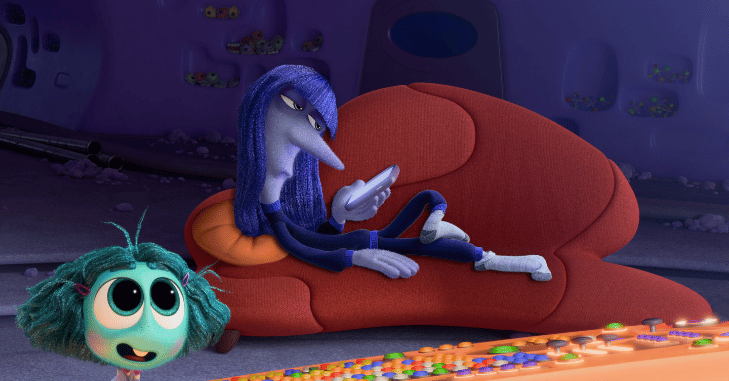
The word “ennui” comes from French and refers to a feeling of boredom, dissatisfaction, weariness, or emotional fatigue. Ennui in Inside Out 2. Unlike ordinary boredom, ennui is often associated with a deeper sense of disinterest and lack of enthusiasm toward activities, people, or situations.
In psychological terms, ennui can be described as a state where someone feels mentally unstimulated and disconnected from their surroundings. It is a common experience during adolescence for individuals to explore their identity and navigate new social pressures.
Who Is Ennui in Inside Out 2?
Ennui is one of the new emotions introduced in Riley’s emotional headquarters alongside Anxiety, Embarrassment, and Envy. She is portrayed as a cool, detached emotion who often appears uninterested in what is happening around her.
Ennui spends much of her time on a smartphone, responding to situations with minimal effort. Her calm demeanor contrasts sharply with the energetic and emotional reactions of other characters, making her both humorous and relatable.
Key Characteristics of Ennui
- Constantly appears bored or unimpressed.
- Speaks in a slow and monotone voice.
- Prefers minimal effort and maximum comfort.
- Represents emotional disengagement.
- Often uses sarcasm and dry humor.
- Reflects feelings commonly experienced during teenage years.
Why Did Pixar Introduce Ennui?
The original Inside Out focused on the primary emotions of childhood, including Joy, Sadness, Anger, Fear, and Disgust. As Riley enters her teenage years in the sequel, her emotional landscape becomes significantly more complicated.
Pixar introduced Ennui to represent a common teenage experience: feeling disconnected, indifferent, or emotionally drained. During adolescence, individuals often encounter periods where they lose interest in activities they once enjoyed or struggle to engage with the world around them.
Ennui’s Role in Riley’s Emotional Development
As Riley navigates the challenges of adolescence, ennui shapes her responses to various situations. Rather than expressing excitement or concern, ennui often encourages a more detached response. This emotional perspective reflects real-life teenage behavior.
where young people may sometimes appear uninterested or withdrawn as they process complex social and personal changes. Ennui’s presence demonstrates that emotional growth is not always energetic or dramatic. Sometimes it involves moments of uncertainty, boredom, and self-reflection.
The Relationship Between Ennui and Other Emotions
Ennui and Anxiety
Anxiety is constantly worried about the future and potential problems, while ennui often seems unconcerned about everything. Their opposing personalities create humorous and meaningful interactions throughout the movie.
Why Audiences Relate to Ennui?
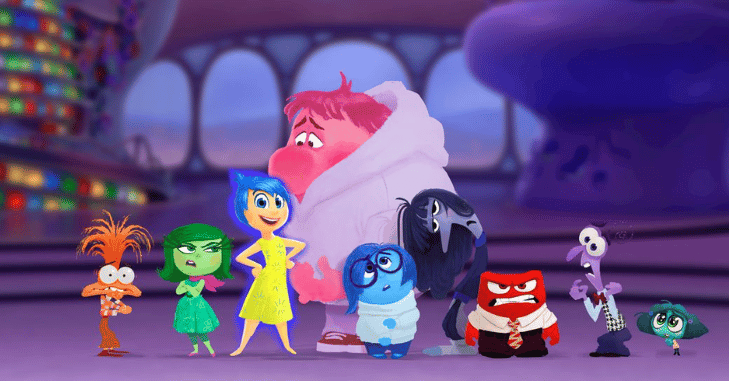
Many viewers connected with Ennui because she reflects a feeling that is rarely discussed openly. Nearly everyone has experienced moments where they felt bored, emotionally exhausted, or detached from everyday life.
Ennui and Joy
The relationship between Ennui and Joy highlights one of the most significant emotional shifts of adolescence. Joy is energetic and optimistic, constantly seeking happiness and positive experiences. In contrast, ennui often responds to situations with indifference, boredom, or a lack of enthusiasm.
Ennui and Embarrassment
Ennui and embarrassment represent two very different reactions to social situations. Embarrassment is highly sensitive to others’ perceptions of Riley and often elicits strong reactions in awkward or uncomfortable moments.
Ennui and Envy
The dynamic between Ennui and Envy adds another fascinating dimension to Riley’s emotional world. Envy constantly notices what others possess, whether it is popularity, talent, appearance, or success, and desires those qualities for herself.
The Psychological Meaning Behind Ennui

Ennui serves as more than just comic relief. She represents an important psychological reality: not every emotional state is intense or dramatic.
People often experience:
- Mental fatigue.
- Lack of motivation.
- Emotional disengagement.
- Temporary boredom.
- Social withdrawal.
- Reduced enthusiasm.
These feelings are normal parts of human emotional development and can occur during periods of change or stress. By giving these emotions a character, Pixar helps audiences better understand and discuss them.
Character Design and Personality
Ennui’s visual design reinforces her personality. Her relaxed posture, half-closed eyes, and casual demeanor immediately convey her emotional intent. The filmmakers intentionally designed her to embody the feeling of being emotionally “checked out.” Her modern use of technology and tendency to avoid unnecessary effort make her especially relatable to today’s teenagers.
Lessons We Can Learn from Ennui
- Emotional variety is normal and includes feelings beyond happiness and sadness.
- Boredom and apathy are natural parts of the human experience.
- Growing up introduces complex emotions that can be difficult to understand.
- Self-awareness helps us recognize when we feel disconnected or unmotivated.
Cultural Impact of Ennui

Since the release of Inside Out 2, Ennui has become one of the movie’s most recognizable characters. Her expressions, quotes, and attitude have inspired countless memes, social media posts, and discussions about teenage emotions. Many fans appreciate how accurately Ennui represents modern feelings of boredom, emotional exhaustion, and disengagement.
particularly true among teenagers navigating the pressures of school, social media, friendships, and personal expectations. Her dry humor, relaxed attitude, and tendency to appear uninterested resonate with audiences who have experienced similar emotions in their own lives.
Conclusion
Ennui in Inside Out 2 is far more than a humorous character who spends her time looking bored and uninterested. She represents a genuine emotional state that many people experience, particularly during adolescence, when personal identity, social relationships, and life expectations become increasingly complex.
By introducing Ennui, Inside Out 2 acknowledges that feelings of boredom, emotional fatigue, and detachment are normal parts of human development and deserve recognition alongside more familiar emotions. Through her interactions with Joy, Anxiety, Embarrassment, and Envy.
Ennui helps create a richer and more realistic portrayal of Riley’s emotional journey. Her presence reminds viewers that every emotion has value and contributes to personal growth, even those that may seem negative or unimportant.
Want to know about Demon Slayer Season 5 Release Date: Infinity Castle Movie Trilogy, Release Schedule, Story Details, Returning Characters Check out our Entertainment category.
FAQs
Ennui refers to feelings of boredom, emotional fatigue, apathy, and a lack of enthusiasm, which are particularly common during adolescence.
Pixar introduced Ennui to reflect the more complex emotional experiences that teenagers face as they grow and develop.
No, Ennui is not a villain. Like all emotions in the film, she serves an important purpose in Riley’s emotional development.
Many people experience periods of boredom, disengagement, and emotional exhaustion, making Ennui a highly relatable character.
Ennui teaches that all emotions, including boredom and apathy, are natural parts of emotional growth and self-understanding.