

Donald Sumpter actor searches often come from viewers who recognise his face but cannot immediately place his name. The English performer has worked across British film and television since the 1960s. His credits span classic Doctor Who, Game of Thrones, Chornobyl, and major international films.
Donald Sumpter is an English actor born on 13 February 1943 in Brixworth, Northamptonshire. He is especially known for Maester Luwin in Game of Thrones and several Doctor Who roles. His long career also includes The Black Panther, The Constant Gardener, Black Mirror, Chornobyl, and The Phoenician Scheme.
| Key fact | Details |
|---|---|
| Full name | Donald Sumpter |
| Date of birth | 13 February 1943 |
| Age in 2026 | 83 |
| Birthplace | Brixworth, Northamptonshire, England |
| Nationality | English / British |
| Profession | Actor |
| Screen career | Since the mid-1960s |
| Famous TV role | Maester Luwin in Game of Thrones |
| Doctor Who appearances | 1968, 1972 and 2015 |
| Other notable television | Black Mirror, Being Human, Chernobyl, Peaky Blinders |
| Notable films | The Black Panther, The Constant Gardener, The Girl with the Dragon Tattoo |
| Recent film credit | The Phoenician Scheme (2025) |
Key Takeaways
- Sumpter was born on 13 February 1943 and turned 83 in 2026.
- His television career reaches back to the 1960s.
- He appeared in three different eras of Doctor Who.
- He played Maester Luwin during the first two seasons of Game of Thrones.
- His British television work also includes Black Mirror, Being Human, Endeavour, and Chernobyl.
- His film credits range from The Black Panther to The Phoenician Scheme.
- His career spans mainstream drama, science fiction, crime stories, period productions, and international cinema.
Who Is Donald Sumpter?
Sumpter was born in Brixworth, Northamptonshire, on 13 February 1943. IMDb and other current entertainment references confirm both his birthplace and birth date. That makes him 83 years old in 2026.
His career is unusual for its length and range. He has moved between television, cinema, period drama, science fiction, crime stories, and literary adaptations. Modern viewers may therefore recognise him from entirely different productions.
His work also connects several generations of British television. He appeared during Doctor Who’s black-and-white era and returned decades later. That career span makes his credits especially interesting for UK television viewers.
How His Acting Career Began
His screen career started during the 1960s, before many of his best-known modern productions existed. An early major television appearance came in Doctor Who: The Wheel in Space during 1968. He played Enrico Casali opposite Patrick Troughton’s Second Doctor.
He returned to the programme in 1972 for The Sea Devils. This time, he appeared as Commander Ridgeway during Jon Pertwee’s period as the Doctor. Those performances began an association with the programme that would eventually cover almost five decades.
His early career was not confined to science fiction. Film and television parts steadily followed during the 1970s. That period eventually produced one of his most challenging leading film roles.
The Black Panther and a Darker Leading Role
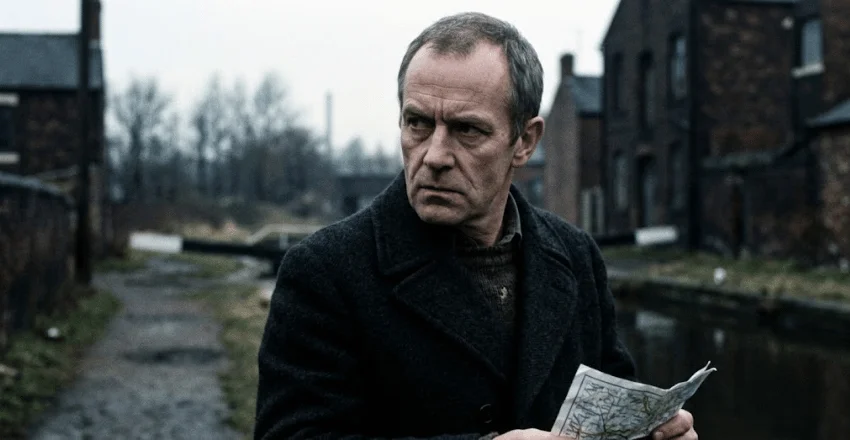
In 1977, Sumpter portrayed British criminal Donald Neilson in The Black Panther. The film dramatised crimes associated with Neilson, including the Lesley Whittle case. It gave the actor a substantial role far removed from his earlier science-fiction work.
The part also illustrates a recurring feature of his career. Directors have frequently cast him in serious, restrained, or unsettling characters. His understated screen presence can make such roles feel particularly controlled.
Later work continued across television drama and literary adaptations. His credits included productions connected with Dickens stories and major British crime programmes. That versatility helped him remain active across changing television eras.
Donald Sumpter Actor Credits That Shaped His Career
No single programme explains his career, as his most recognisable work spans several decades. His credits include British institutions alongside international productions. Ten roles provide a useful snapshot of that range.
- Enrico Casali, Doctor Who: The Wheel in Space (1968)
- Commander Ridgeway, Doctor Who: The Sea Devils (1972)
- Donald Neilson, The Black Panther (1977)
- Alexander Bonaparte Cust, Agatha Christie’s Poirot (1992)
- Uncle Ginger, The Queen’s Nose (1995–1998)
- Kemp, Being Human (2009–2010)
- Maester Luwin, Game of Thrones (2011–2012)
- Julian Hereford, Black Mirror (2011)
- Rassilon, Doctor Who: Hell Bent (2015)
- Zharkov, Chernobyl (2019)
This range helps explain why viewers from different age groups may remember him differently. Children’s television audiences might associate him with The Queen’s Nose. International audiences are more likely to recognise his later HBO work.
ThinkVista has similar career guides covering other familiar British performers. Its Ashley Walters movies and career profile provide another example. The site also covers performers whose television careers developed across several genres.
Maester Luwin in Game of Thrones
One of his most internationally recognised roles is Maester Luwin in Game of Thrones. Luwin serves House Stark at Winterfell and advises the family during the programme’s opening seasons. The character combines scholarship, loyalty, medicine, and political caution.
Sumpter appeared during seasons one and two of the HBO series. The role brought his work to audiences beyond the British programmes that had defined much of his earlier career. It also became one of the credits most strongly associated with his name.
His restrained performance suited a character who often provided reason amid instability. Luwin was rarely the loudest figure in a scene. His authority came instead from experience and his relationship with the Stark household.
His Remarkable Doctor Who Connection
Few actors have a connection with Doctor Who stretching across such different periods. He first appeared in 1968, followed by another role in 1972. More than four decades later, he returned to the programme in 2015.
That later appearance came in the episode Hell Bent. He portrayed Rassilon, the powerful Time Lord figure previously played by other actors. His return linked the programme’s early history with its modern television era.
For readers interested in other performers connected with British television institutions, ThinkVista covers Ralf Little’s television career and age. Both careers show how familiar UK actors can remain visible across changing television formats.
Black Mirror, Peaky Blinders and Chernobyl
His twenty-first-century work extends far beyond fantasy and science fiction. He appeared as Julian Hereford in the first Black Mirror episode, “The National Anthem,” released in 2011. That credit placed him in another British programme that later gained a large international audience.
His later television credits include Peaky Blinders, Endeavour, Les Misérables, Temple, and Chernobyl. In the acclaimed 2019 miniseries Chernobyl, he appeared as Zharkov. These roles kept him visible after more than five decades in front of the camera.
ThinkVista’s entertainment coverage also includes performers from comedy, drama, and stage backgrounds. Readers can continue with its Julia Sawalha movies and television guide. Another related profile covers Susannah Fielding’s films and television work.
Important Film Roles
His cinema career includes work with major directors and international casts. Credits include Enigma, K-19: The Widowmaker, The Constant Gardener, and Eastern Promises. He also appeared in The Girl with the Dragon Tattoo and In the Heart of the Sea.
These films placed him alongside performers including Ralph Fiennes, Rachel Weisz, Daniel Craig, and Chris Hemsworth. His roles were not always leading. Still, they added to a career built around dependable character acting.
More recently, he appeared in Limonov: The Ballad and Wes Anderson’s The Phoenician Scheme. Current filmography sources list The Phoenician Scheme among his 2025 credits. His screen work has therefore extended well beyond the productions that first made him familiar.
Why His Career Has Lasted So Long
Longevity has been a defining feature of his professional life. He has worked through major changes in British broadcasting, international television, and film production. Few actors remain active across such a long period.
His casting range has also helped. He can play authority figures, criminals, advisers, academics, politicians, and unsettling supporting characters. Those roles require presence without depending on conventional leading-man status.
That flexibility helps explain his continued visibility. A viewer may discover him through Game of Thrones and then find decades of earlier British work. Another viewer may remember him from childhood television before encountering his modern dramas.
Frequently Asked Questions
What is Donald Sumpter best known for?
He is widely recognised for playing Maester Luwin in Game of Thrones. British viewers may also know his three separate Doctor Who appearances. Other notable credits include Black Mirror, Being Human, Chernobyl, and The Black Panther.
How old is Donald Sumpter in 2026?
He is 83 years old in 2026. He was born on 13 February 1943 in Brixworth, Northamptonshire. His birthday and birthplace appear consistently across major current entertainment databases.
Who did he play in Game of Thrones?
He played Maester Luwin of Winterfell. Luwin advised House Stark and appeared during the first two seasons. The part remains one of Sumpter’s most internationally recognised television roles.
Was he in Doctor Who?
Yes, he appeared in three different periods of the programme. He appeared in 1968, 1972, and 2015. In 2015, he portrayed Rassilon in Hell Bent.
Was Donald Sumpter in Chornobyl?
Yes, he appeared as Zharkov in the 2019 television miniseries Chernobyl. The production became another prominent late-career credit. It followed decades of work across British and international television.
Is he still acting?
Recent filmographies show credits extending into the mid-2020s. They include Limonov: The Ballad and The Phoenician Scheme. British Comedy Guide also lists Entitled among his more recent television work.
A Career Across Generations of British Television
Sumpter’s career offers a striking route through British screen history. His credits connect 1960s television with modern global productions. Few performers can point to such a broad mixture of programmes and films.
Viewers may know him as Maester Luwin, Rassilon, Zharkov, or one of his earlier British characters. Each role belongs to a different stage of a remarkably long career. Together, they show why his face remains familiar across several generations.
