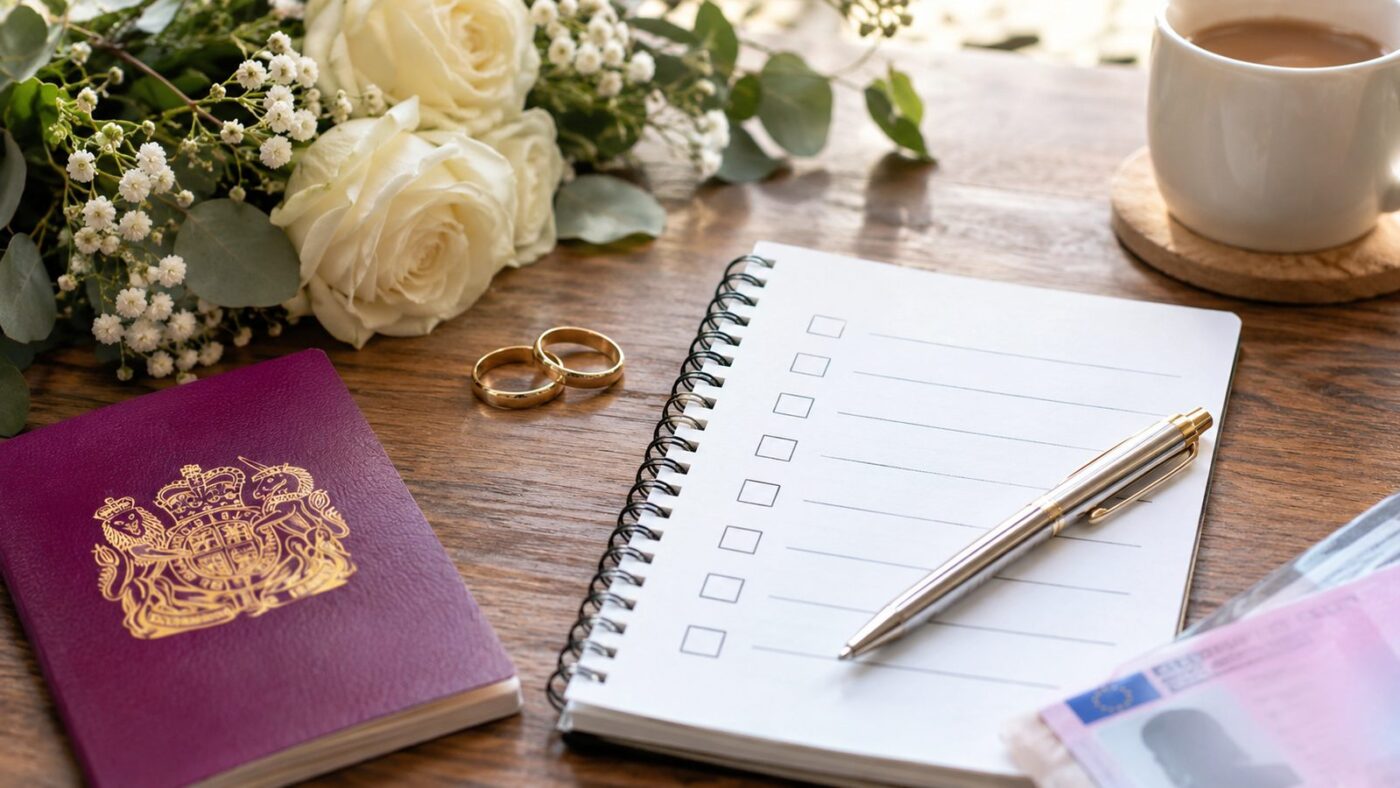
Changing name after marriage does not happen automatically in the UK. You can keep your existing surname or adopt another one. If you change it, you must update organisations individually using suitable evidence. For many couples, a marriage or civil partnership certificate provides enough proof for a straightforward surname change. A deed poll is usually unnecessary when taking your spouse’s surname. Different evidence may be needed when making a more complex change. Direct answer: After marriage, you can usually take your spouse’s surname using your marriage certificate as evidence. Start with identity records, then update tax, employment, financial, property, and household accounts. A deed poll may be needed when your chosen name goes beyond a straightforward marriage-related surname change.
Name Change After Marriage: Key Facts
| Question | UK position |
|---|---|
| Must you change your surname after marriage? | No. It is entirely your choice. |
| Does marriage automatically change your name? | No. Records must be updated separately. |
| Do you normally need a deed poll? | No, when simply taking your spouse’s surname. |
| What is the main proof? | Your marriage or civil partnership certificate. |
| Can you keep your existing surname? | Yes. No change is required. |
| Can you use a double-barrelled surname? | Often yes, using your marriage certificate as evidence. |
| Should travel bookings match your passport? | Yes. Book travel in the passport name you will use. |
| Must drivers update their licence? | Yes, if their name changes. |
| Should HMRC be told? | Yes. HMRC provides an online name-change service. |
| Can property records be updated? | Yes. Procedures vary across the UK. |
Changing Name After Marriage: What Should You Do First?
The easiest approach is to work from important identity records towards everyday accounts. This reduces situations where one organisation asks for identification showing your new surname. Keep your marriage certificate safe while completing the process. Before sending documents anywhere, check whether an organisation accepts copies or needs originals. Requirements can differ between banks, government bodies, and other providers. Recording each completed update also prevents missed accounts. Use this order as a practical starting point:
- Get your marriage or civil partnership certificate.
- Decide exactly how your new surname will appear.
- Check your passport and upcoming travel arrangements.
- Update your driving licence where applicable.
- Notify HMRC and your employer.
- Update banks, lenders, pensions, and insurance.
- Update electoral and property records.
- Finish household, healthcare, membership, and subscription accounts.
1. Get Your Marriage Certificate Ready
Your marriage certificate is often the key evidence connecting your former surname with your married surname. In England and Wales, certified copies can be ordered through the General Register Office. Scotland and Northern Ireland use their own certificate services. Consider whether you need more than one certified copy before starting several postal applications. Some organisations may retain documents while processing your request. Always confirm their document requirements before posting valuable originals. If you cannot find your certificate, order an official replacement rather than sending an ordinary photocopy. GOV.UK provides the current certificate ordering service for England and Wales. Different arrangements apply in Scotland and Northern Ireland.
2. Decide Exactly Which Name You Will Use
Marriage does not require either spouse to change their surname. You may continue using the name you already have. You can also adopt your spouse’s surname if that suits you. A straightforward married surname can usually be supported by the marriage certificate. GOV.UK confirms that you do not need a deed poll simply to take your spouse’s surname. You can read ThinkVista’s broader guide to legally changing your name in the UK for other situations. Double-barrelled surnames can also be accepted using marriage evidence in many circumstances. More unusual combinations can create different documentary requirements. Check each important record-holder before assuming the certificate will be sufficient.
3. Sort Out Your Passport Before Booking Travel
Travel plans deserve early attention because booking details should match your passport. HM Passport Office allows a new passport in your married name before or after the ceremony. Applying before marriage can create timing restrictions. GOV.UK states that you can apply for a post-dated passport up to three months before the ceremony. Your old passport will be cancelled when the replacement is issued. The new passport cannot be used before the ceremony date. Some countries may not issue visas against a post-dated passport. Check your destination’s rules before choosing this route. If you plan to travel under your existing passport, book travel using that exact name. Avoid mixing your married surname with an unchanged passport. ThinkVista’s family holiday checklist can help with wider travel-document preparation.
4. Update Your Driving Licence
Drivers in Great Britain must tell the DVLA if their name changes. The application is normally made by post rather than through the online address-change service. Supporting evidence must link your old and new names. GOV.UK confirms that there is no fee to change the name on a driving licence, and it lists a marriage or civil partnership certificate as accepted evidence. Check the latest form and document requirements before posting anything. Northern Ireland uses the Driver and Vehicle Agency rather than the DVLA. A name change requires documentary evidence there too. Northern Ireland residents should use the current DVA guidance instead of Great Britain forms. If you own a vehicle, remember its registration records as well. Changing a driving licence does not automatically update every vehicle record. Check your V5C or Northern Ireland vehicle documents separately.
5. Tell HMRC and Your Employer
HMRC asks taxpayers to report changes to personal details, including their name. You can normally make the update through the relevant online service. The HMRC app also supports certain personal-detail changes. Use the official HMRC personal details service rather than relying on your employer alone. Tell your employer separately so payroll and workplace records use consistent details. Check pensions and employee benefits at the same time. Marriage itself can also affect some tax circumstances. HMRC provides separate options for reporting relationship or family changes. Review those if your circumstances change beyond your surname.
6. Update Banks, Cards, Loans, Pensions, and Insurance
Financial organisations set their own evidence procedures for account changes. Some may accept a certificate in branch, while others use postal or digital processes. Check your provider’s instructions before starting. Update current accounts, savings accounts, credit cards, loans, and mortgage records where relevant. Pension providers and investment platforms should also receive your new details. Keep copies of any confirmation letters for your records. Tell your insurers about the new name as well. This can include motor, home, travel, life, and private medical insurance. Consistent records make later identity checks easier. Marriage can create other household administration beyond identity documents. ThinkVista’s guide to organising belongings during major life changes covers practical household planning. The broader Lifestyle section also contains useful family and travel resources.

7. Update the Electoral Register
If you live in the UK, you should register again when your name changes. The GOV.UK registration service allows you to update your personal details. The process usually takes only a few minutes. Use the official register to vote service with your new details. Your local electoral registration office can help if you are unsure about an existing registration. Northern Ireland also has specific electoral arrangements. Updating electoral information can also help maintain consistent identity records. Do not assume another government department changes it automatically. Treat the electoral register as a separate update.
8. Check Property and Mortgage Records
Homeowners should review the name recorded against their property. In England and Wales, HM Land Registry has a specific marriage-related procedure. The application uses form AP1 with suitable evidence. HM Land Registry currently states that there is no fee for a marriage-related name update. An official copy of the marriage or civil partnership certificate can provide evidence. Its name-change guidance for property owners explains the process. Scotland and Northern Ireland operate different land-registration systems. Use the relevant national land-register service if your property is located there. Do not send an England and Wales form for property elsewhere.
9. Work Through the Remaining Accounts
After government, travel, financial, and property records, deal with everyday organisations. These accounts are less urgent but can create confusion if forgotten. A written checklist makes the final stage much easier. Common records include the following.
- GP, dentist, and private healthcare providers
- Council Tax and local council services
- Utility suppliers
- Mobile and broadband providers
- Landlord or letting agent
- Workplace directories and professional bodies
- Universities and training providers
- Loyalty schemes and memberships
- Subscription services
- Online shopping accounts
- Emergency contact information
- Wills and other personal planning documents
Do not send sensitive identity documents unless an organisation genuinely requires them. Use secure account portals whenever possible. Keep confirmation messages until every major record matches.
When Do You Need a Deed Poll After Marriage?
A deed poll is generally unnecessary if you simply adopt your spouse’s surname. Your marriage or civil partnership certificate normally establishes the connection. GOV.UK expressly recognises this route. You may need different evidence when making changes beyond a normal married surname. Examples can include changing a forename or adopting an unrelated surname. An organisation may also have specific evidence rules. An unenrolled deed poll can be created by eligible people without paying a government application fee. Adults can also choose the enrolled High Court process in England and Wales. Read the official deed poll guidance before paying a commercial provider.
What About Scotland?
Marriage does not force a surname change in Scotland either. National Records of Scotland says most organisations accept marriage evidence for a new married surname. You do not need its formal birth-certificate name-change service for a marriage-related surname change. The Scottish system differs for name changes unrelated to marriage. Birthplace and the type of change can affect the route. Use National Records of Scotland guidance when Scottish registration rules apply. This distinction matters because UK-wide articles sometimes combine separate procedures. Passport rules are UK-wide, but licensing and land registration can differ. Always follow the authority responsible for your part of the UK.
Common Mistakes to Avoid
Administrative problems usually come from inconsistent records rather than the decision itself. Travel documents are especially sensitive to mismatched names. Original certificates also need careful handling. Avoid these mistakes.
- Booking flights under a name that differs from your passport
- Assuming marriage automatically changes every record
- Paying for a deed poll you do not need
- Sending original documents without checking requirements
- Forgetting your driving licence or vehicle records
- Updating your employer but not HMRC
- Leaving bank and insurance records inconsistent
- Forgetting the electoral register
- Using England and Wales procedures in Scotland or Northern Ireland
Create one master list and date each completed change. Save application references where available. This simple record can prevent duplicated requests.
Frequently Asked Questions
Do I need a deed poll when changing name after marriage?
Usually not if you are taking your spouse’s surname. Your marriage or civil partnership certificate normally provides the required evidence. A deed poll can become relevant for other types of name changes.
Does my surname change automatically when I get married?
No, marriage itself does not automatically rewrite your records. You decide whether you want to use a different surname. You then tell each organisation that holds your details.
Can I keep my maiden or existing surname after marriage?
Yes, you can continue using your existing surname. There is no general UK requirement to adopt your spouse’s name. If nothing changes, most records need no surname update.
Can I double-barrel our surnames?
A straightforward combination of the spouses’ surnames is often supported by the marriage certificate. HM Passport Office accepts marriage evidence for qualifying double-barrelled names. Check other organisations because their documentary policies can differ.
Should I change my passport before my honeymoon?
Only if the timing suits your travel arrangements. Your booking name must match the passport you travel with. Many people therefore travel first and update the passport afterwards.
Who should I notify first?
Start with records that affect identification and travel. Passport and driving records are sensible early priorities. Then update HMRC, employment, financial, insurance, electoral, and property records.
Your Next Step
Start by deciding exactly which surname you want to use. Then gather your marriage certificate and list every organisation holding your personal details. Deal with identification and travel records before less urgent accounts. Use official government guidance whenever requirements or fees may have changed. Keep copies of correspondence and track each completed update. That approach makes the process easier and reduces mismatched records. —